
About Minhaj University Lahore
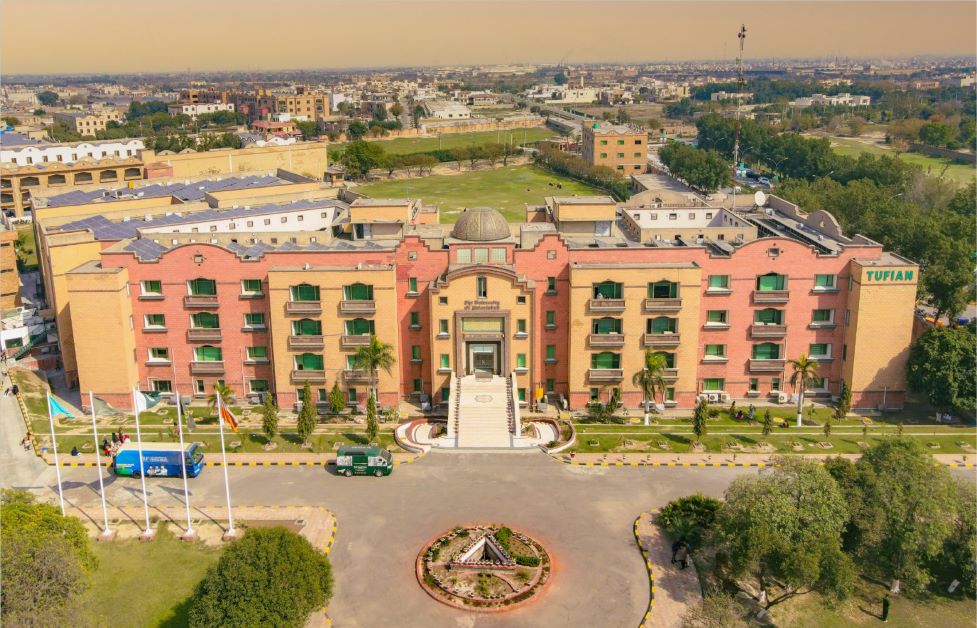
MUL is a chartered, private degree-awarding university in Township, Lahore. It was founded in 1986 by Dr. Muhammad Tahir-ul-Qadri, the head of Minhaj-ul-Quran International, and HEC has ranked it in the ‘W3′ category. It’s co-educational, with a separate off-site girls’ hostel for out-of-city female students.
It’s not a small college anymore — MUL runs full faculties in engineering, computing, pharmacy, law, and social sciences, plus a genuinely huge menu of niche BS and associate degrees you won’t find at most private universities.
Programs and Degrees at MUL
Here’s a curated look by faculty — MUL’s actual catalog runs into dozens of specializations, so this covers the ones students ask about most:
Faculty of Engineering
- B.Sc. Electrical Engineering (4 years)
- B.Sc. Chemical Engineering (4 years)
Faculty of Computer Science & IT
- BS Computer Science, BS Software Engineering, BS Information Technology, BS Artificial Intelligence, BS Cyber Security, BS Data Science
- Associate Degrees (2-year) in CS, IT, AI, Cyber Security, and Software Engineering — useful if you want a shorter, cheaper entry point
Faculty of Economics & Management Sciences
- BBA, BS Accounting & Finance, BS Islamic Banking & Finance, BS E-Commerce, BS Financial Technology, BS Digital Marketing, B.Com (Hons)
Faculty of Allied Health Sciences & Pharmacy
- Doctor of Pharmacy (Pharm-D, 5 years)
- Doctor of Physical Therapy (DPT, 5 years)
- BS Medical Laboratory Technology, BS Human Nutrition & Dietetics, BS Biotechnology, BS Food Science & Technology
Faculty of Law
- LLB (5-year program)
Faculty of Social Sciences & Humanities
- BS Psychology, BS International Relations, BS Criminology & Forensic Sciences, BS Peace & Conflict Studies, BS Mass Communication
Postgraduate & research: MS/M.Phil across most departments (2 years) and PhD programs (3+ years) in fields ranging from Economics to Islamic Studies to Food Science.
One honest flag: B.Sc. Chemical and Electrical Engineering are proper engineering degrees (PEC-relevant), not “engineering technology” degrees — that distinction matters if you’re planning to register as an engineer later.
Fee Structure at MUL
MUL prices its degrees as total packages across all semesters, not just per-semester. Real published figures:
| Degree Program | Duration | Total Package (PKR) |
| BS Computer Science / Software Engineering / IT | 4 years | ~1,019,700 |
| BBA | 4 years | ~865,000 – 894,700 |
| BS Accounting & Finance | 4 years | ~729,700 |
| B.Sc. Electrical / Chemical Engineering | 4 years | ~513,204 |
| BS Medical Lab Technology / Biotechnology | 4 years | ~694,700 – 794,700 |
| LLB | 5 years | ~1,334,700 |
| Doctor of Pharmacy (Pharm-D) | 5 years | ~1,800,000 |
| Associate Degree (CS/IT/AI, 2-year) | 2 years | ~310,000 – 322,700 |
A few honest notes:
- These packages include admission fee, library security (refundable), exam fees, and per-semester tuition rolled into one number — not just tuition.
- Payment is split into semester installments, generated as a challan through the university’s online CMS portal — not a lump sum.
- Engineering here is actually cheaper than computing, which surprises a lot of families — worth double-checking against the official fee calculator since it updates by intake.
Admissions Information & How to Apply
Eligibility varies clearly by program:
- CS & IT programs: Minimum 50% marks in Intermediate/A-Level, with Mathematics. If you didn’t study Math at Intermediate, you’ll take deficiency courses in your first two semesters.
- B.Sc. Engineering (Chemical/Electrical): Minimum 60% marks in FSc Pre-Engineering, ICS, relevant DAE, or A-Levels, plus a minimum 33% in UET-ECAT, NTS-NAT, or another PEC-approved entry test. (Note: PEC has currently waived this 33% minimum requirement until further notice — check current status before assuming it’s needed.)
- LLB (5 years): Minimum 45% in Intermediate plus 50% in the HEC-conducted Law Admission Test (LAT).
- Pharm-D: Minimum 60% in FSc Pre-Medical plus 50% in the MUL admission test.
- Business, social sciences, and most other BS programs: Minimum 45% in Intermediate or A-Level.
Application steps:
- Register an account on the MUL admission portal.
- Fill in academic marks (Matric, Intermediate, DAE, or A-Levels) and select your program.
- Upload mark sheets, CNIC/B-Form, and a passport photo.
- Generate and pay the admission processing fee challan online or at the bank.
- Sit any required test — ECAT/NTS for engineering, LAT for law — and attend an interview where applicable.
Admissions run in Spring and Fall intakes, announced through the official website and press ads — always check the current dates rather than relying on any past cycle.
Scholarships at MUL
This is where MUL is genuinely generous, and the categories stack in interesting ways (though you can usually only claim one at a time):
- Prof. Dr. Tahir-ul-Qadri Scholarship: based on a competitive exam held after admission — 70-79% composite marks gets 20% off, 80-89% gets 40%, 90-94% gets 70%, and 95%+ gets a full 100% fee waiver, for one semester.
- Merit-Based Scholarship (at admission): top 3 board position holders get 100% off; 85%+ marks gets 50%; 80-84% gets 30%; 75-79% gets 20%; 65-74% gets 10%. This applies to the first semester only.
- CGPA-Based Performance Scholarship (ongoing): 3.85-4.00 CGPA gets 50% off; 3.70-3.84 gets 40%; 3.55-3.69 gets 30%; 3.40-3.54 gets 20%; 3.25-3.39 gets 10%. You need to maintain at least 3.25 to stay in this bracket.
- Regional and community concessions: 25% off for students from Balochistan, Gilgit-Baltistan, Sindh, or KPK; concessions for the Christian community, religious seminary students, government officers, army personnel, and police families.
- Kinship-based: two or more siblings studying together get 20% off (younger sibling).
- Need-based: 5-20% depending on documented financial hardship, disability, or orphan status.
Apply through the scholarships page — note that double concessions generally aren’t allowed except in specific combinations, and 80% attendance is required to keep any award.
Campus Life & Culture
MUL sits in Township, a central, well-connected part of Lahore — easy to reach from most areas of the city, so day-scholars have it easy. The campus runs on a “Smart Campus” system (CMS) for admissions, fee payment, results, and course registration — genuinely useful if you’re not a fan of standing in queues.
Labs are a real strength here: over 100,000 sq. ft. of dedicated research lab space across chemistry, physics, pharmaceutical sciences, engineering, and biological sciences. There’s also a robotic library, digital library access, air-conditioned classrooms, a daycare center, and two on-campus cafés.
Honest pros: strong lab infrastructure for a private university, a wide range of niche degree options, and one of the more detailed scholarship systems you’ll find in the private sector. Honest cons: MUL doesn’t run its own on-campus hostel — the “MUL Girls Hostel” is actually a separate, third-party-managed facility (Uptown 86) with its own contact number, not something the university directly runs. If hostel life matters to your decision, verify current arrangements directly rather than assuming it’s on-campus.
Career paths: CS/SE/AI grads generally head into Lahore’s software industry, freelancing, or fintech. Pharm-D and DPT grads move into hospitals, pharmacies, and clinics. Law grads sit for the bar or pursue judiciary exams. Business grads go into banking, corporate roles, or family businesses. No official starting-salary data is published by the university.
How it compares: For CS/engineering specifically, University of Central Punjab (UCP) and University of Management and Technology (UMT) are close, similarly-priced Lahore private universities worth comparing fee-for-fee. If budget is the main concern, MUL’s Associate Degree tracks (2-year, roughly a third of the full BS cost) are worth a serious look before committing to the full 4-year package.
FAQs
Yes, it holds degree-awarding status from the Government of Punjab and is HEC-recognized in the ‘W3’ category.
Yes, for specific programs: ECAT/NTS for B.Sc. Engineering, LAT for LLB, and MUL’s own admission test for Pharm-D and some postgraduate programs. Most other BS programs go on academic merit alone.
Around Rs. 1,019,700 as a total package across 8 semesters, based on the officially published fee breakdown.
Merit-based (up to 100% for top board positions), ongoing CGPA-based concessions, regional quotas, need-based aid, and community/organization-based discounts — though most can’t be combined.
Yes, with a separate hostel facility available for female students.
There’s a girls’ hostel, but it’s run by a third-party facility (Uptown 86), not directly by the university — confirm current details before relying on it.
Graduates typically move into Lahore’s IT, pharmaceutical, legal, and corporate sectors, depending on their program.
Phone: (+92) 42 35145621-9. Admission Helpline: 03 111 222 685. Email: admission@mul.edu.pk. Address: Minhaj University Lahore, Township, Lahore.