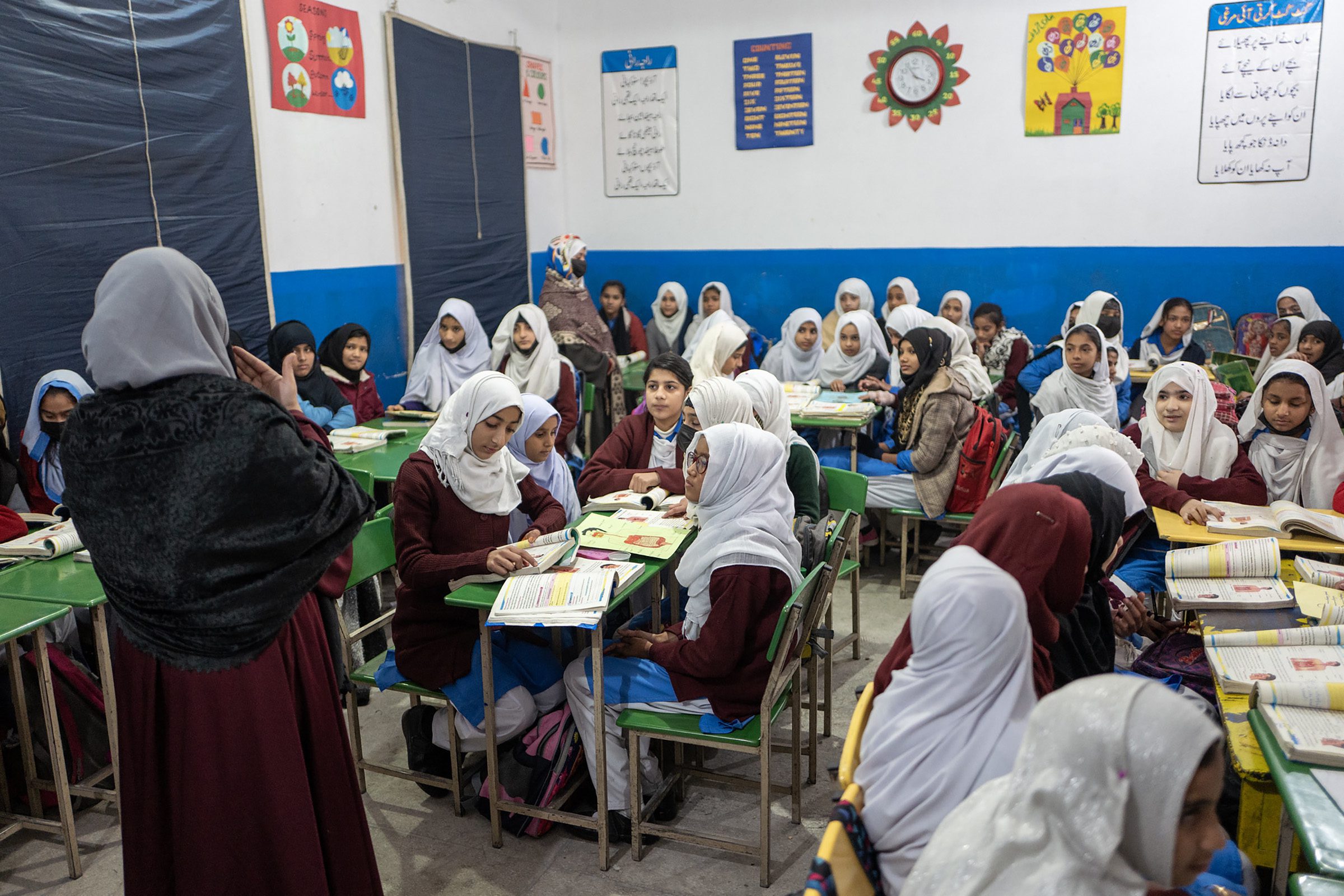

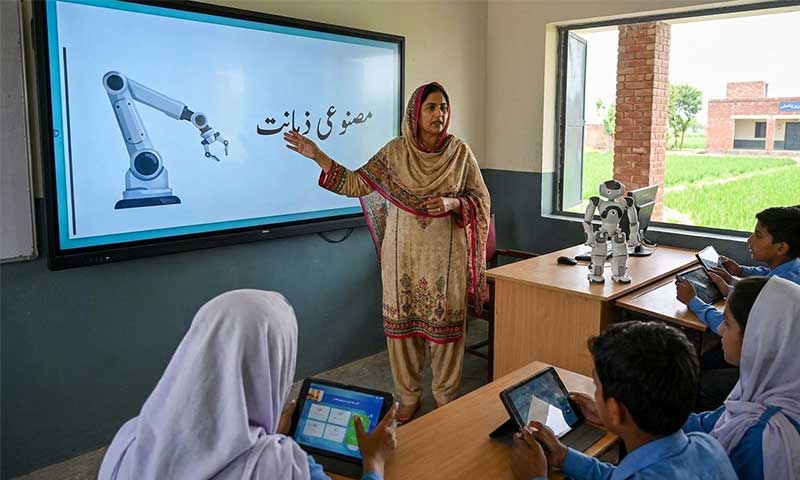
In a historic move aimed at reshaping the educational framework, the Government of Khyber Pakhtunkhwa has announced the inclusion of Artificial Intelligence (AI) as a compulsory subject for students from grades 6 to 12.
This initiative, set for a phased rollout beginning in March 2026, aims to prepare young learners for the rapidly evolving global digital landscape. The policy represents a significant step toward equipping students with essential skills for future academic and professional success.
Strategic Move to Modernize Provincial Education System
Official statements and policy documents from the KP Education Department confirm the province’s strategic shift toward technology-driven learning. The primary goal is to modernize the education system by integrating AI and digital skills directly into the standard curriculum. This transition makes AI education a core part of learning, moving it beyond optional computer science topics into essential knowledge for every student.
A senior KP Education Department official emphasized the long-term vision, stating, We aim to keep pace with global trends but to prepare students to lead in emerging technological fields. The initiative underscores the necessity of AI literacy for national and international competitiveness. By embedding AI into daily learning, students will gain both technical proficiency and critical thinking skills needed for future innovation.
Major Infrastructure and Curriculum Gaps Identified
Despite its visionary potential, the program faces considerable challenges. A province-wide assessment highlighted significant infrastructure gaps, revealing that 5,525 new IT laboratories are urgently needed to deliver effective AI instruction. These gaps could impede students’ hands-on learning experiences if not addressed promptly.
The specific requirements are striking 3,515 labs are needed at the middle school level 225 for higher secondary schools and 1,785 across other grades. Additionally, the current Computer Science curriculum contains almost no AI-focused content necessitating a complete redesign. A structured age appropriate syllabus must be developed to ensure that students from grades 6 to 12 can progressively master AI concepts.
Phased Curriculum Integration and Teacher Recruitment Drive
To make AI education effective, the KP government will implement the new content gradually. Between 35% and 50% of the revised curriculum will focus on AI topics with the proportion adjusted according to grade level.
Early grades will focus on basic digital literacy and computational thinking, while higher grades will explore advanced subjects like machine learning, data ethics and AI-powered problem solving. Recognizing that teachers are central to quality education, the government has initiated a large scale recruitment campaign to hire 7,555 specialized IT instructors.
These educators will receive extensive training to develop students technical skills and to effectively deliver AI lessons across all grades. By combining curriculum updates with qualified teachers, KP aims to create a robust learning environment that aligns with global technological standards.
Aligning with Global Trends for Future Readiness
Education experts view this reform as a critical response to the Fourth Industrial Revolution. Countries around the world are incorporating AI into national education policies, emphasizing its importance in shaping future-ready citizens. According to an Islamabad based education analyst, KP’s initiative, if executed properly, could place its students at the forefront of technological adoption in Pakistan.
The government intends for students to move from passive technology consumers to informed creators capable of interacting responsibly and innovatively with AI systems. This approach ensures that young learners not only understand technology but also acquire problem solving and critical thinking skills required for higher education and professional careers.
The Roadmap to Implementation: A Multi-Phase Approach
With the March 2026 timeline approaching, authorities have designed a detailed multi-phase strategy to ensure successful implementation. However, the first phase involves finalizing age appropriate, competency based syllabi and creating modern learning materials suitable for grades 6 to 12.
Simultaneously, the government will launch a massive infrastructure program to establish the 5,525 required IT laboratories, including hardware, software, and reliable internet connectivity. The program will recruit and train 7,555 new IT teachers in AI pedagogy as a critical component of this roadmap.
To ensure smooth adoption, pilot programs are expected to begin in selected schools before scaling the initiative to a province-wide rollout. This phased approach allows adjustments based on early feedback, ensuring that all students eventually receive high-quality AI education.
Challenges and the Path Forward
The KP AI education program is unprecedented and faces several challenges that require sustained effort, investment and planning.
- Bridging infrastructure gaps in remote and underdeveloped districts
- Establishing a continuous teacher training pipeline
- Ensuring equitable access for all students
- Leveraging public-private partnerships and international collaborations for resources
The Role of Parhlo Pakistan in Promoting AI Literacy
Platforms like Parhlo Pakistan play an essential role in complementing formal education initiatives by providing students with easy access to educational content. Parhlo Pakistan aims to create awareness about technological advancements and offers resources that help students understand complex subjects like AI. By bridging the gap between formal classroom instruction and online learning, such platforms enhance students’ readiness for AI education and equip them with tools for self-guided learning.
A Visionary Leap Toward Education Transformation
The decision to make AI compulsory from grades 6 to 12 reflects a bold vision for the future of education in Khyber Pakhtunkhwa. Moreover, its success will depend on meticulous execution, strategic investment, and unwavering political commitment. By preparing students to understand, develop, and utilize AI responsibly, the government is fostering a generation capable of shaping the digital economy.
This educational reform represents more than just curriculum change; it is a transformative movement aimed at preparing students for a world dominated by technology. KP’s initiative demonstrates that with vision, planning, and collaboration, public education can adapt to global trends while empowering students with skills for lifelong success.