

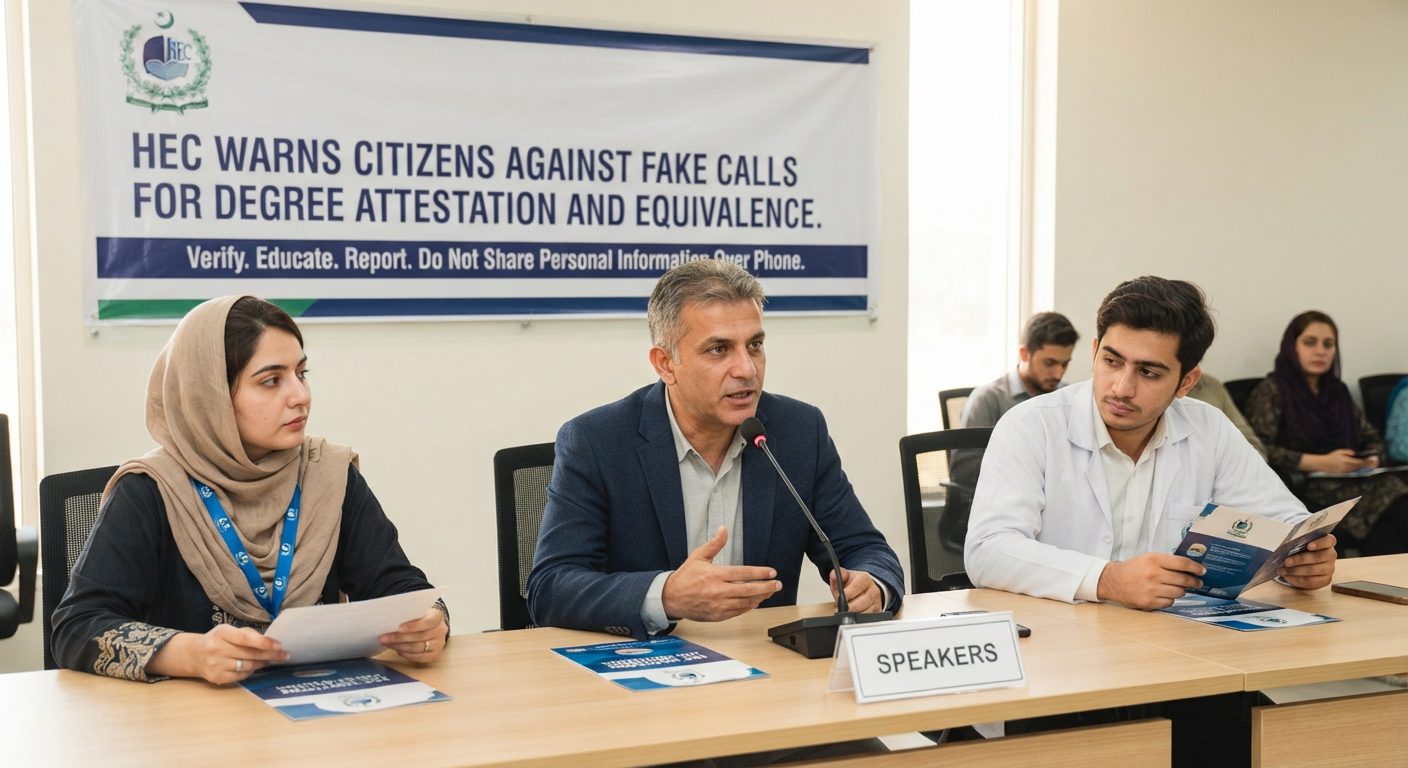
The Higher Education Commission (HEC) has warned citizens about fraudulent phone calls from people pretending to be representatives of the commission and asking for money or personal information.
The warning follows several complaints received by HEC regarding scammers who are using the commission’s name to target people seeking degree attestation, equivalence and other HEC-related services.
Scammers Using HEC Name to Demand Money
According to HEC, individuals involved in the fraud are contacting members of the public and presenting themselves as HEC officials.
They may claim that they can arrange or speed up services such as degree attestation or equivalence in return for a payment. Such claims can appear convincing to people who are already dealing with official education documents.
HEC has clarified that it has not authorised any representative to contact citizens by phone for these purposes.
The commission has also made it clear that its services are not provided through unsolicited phone calls and that officials do not ask citizens to make payments through such calls.
Citizens should therefore be particularly careful when an unknown caller claims to have access to an HEC service or asks for money to complete an official process.
HEC Advises Public Not to Share Sensitive Information
The commission has also urged citizens not to provide sensitive information to unknown callers.
This includes PIN codes, passwords, financial information and personal details. Sharing such information can put a person’s accounts or other personal data at risk.
People should also avoid following instructions from suspicious callers, particularly when they are asked to provide information or make a payment immediately.
Those who need degree attestation, equivalence or other HEC services should verify the relevant procedure through official channels. Citizens can visit the official HEC website for information about the commission’s services and procedures.
What Should You Do If You Receive a Suspicious Call?
If someone calls claiming to be an HEC representative and asks for money or sensitive information, citizens should not share the requested details.
Instead, they should end the call and verify the information through an official HEC channel. This can help distinguish genuine communication from an attempt to misuse the commission’s name.
HEC has advised people who receive suspicious calls to report them to the relevant telecom operator’s helpline. Complaints can also be reported to the Pakistan Telecommunication Authority (PTA).
Citizens should keep details of suspicious calls where possible, including the phone number and the nature of the request, when reporting the incident.
HEC Urges Citizens to Verify Before Making Payments
Degree attestation and equivalence are important services for students and graduates, particularly when academic documents are required for employment, further education or other official purposes.
This makes such services an attractive target for fraudsters who may try to take advantage of people looking for a quick solution.
HEC’s latest warning highlights the importance of using official channels instead of relying on unexpected calls or individuals claiming to have connections within the commission.
The commission has urged citizens to remain cautious and verify any communication before