
Let me be straight with you. Choosing a design school in Pakistan is confusing. Every private institute promises you will be the next big fashion designer. Every billboard shows a model in couture. But most of those schools charge you like you are buying a luxury car every semester.
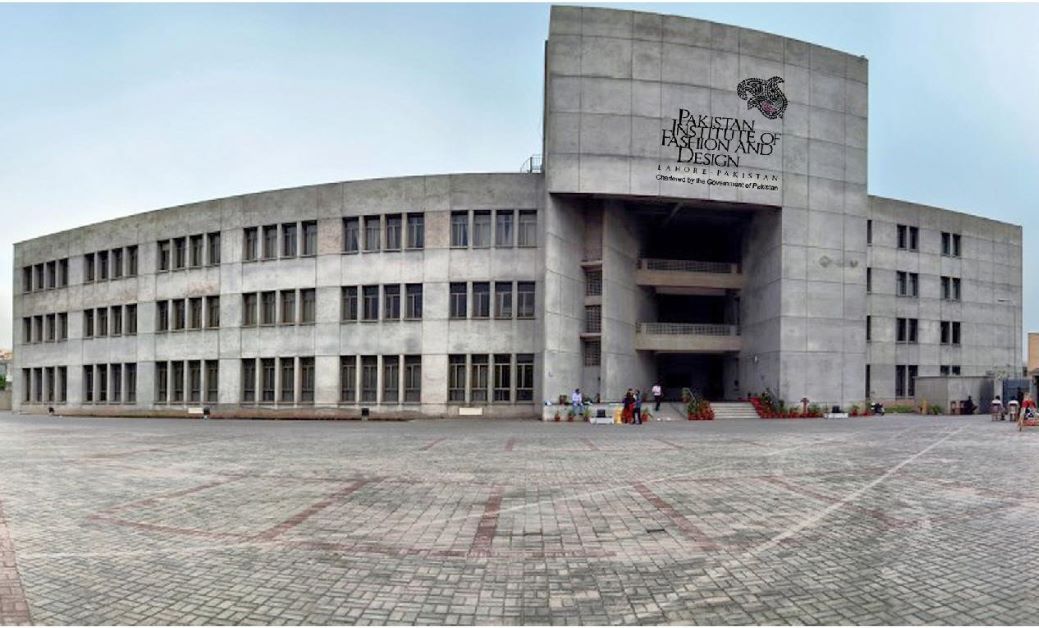
Then there is PIFD — the Pakistan Institute of Fashion and Design in Johar Town, Lahore. It is public. It is chartered by the government. And it costs a fraction of what private design colleges charge. But is it actually good? Will you get a job? Is the entry test impossible? What about the hostel?
I have dug into every official document, talked to the numbers, and put together this guide. No fluff. Just what you need.
What Is PIFD, Really?
PIFD started back in 1994 as the Pakistan School of Fashion Design. In 2011, it became a full degree-awarding institute through an Act of Parliament. That means your degree is recognized by HEC. It is not some random diploma mill.
The campus sits on about 8 acres in Johar Town, Lahore. It has over 1,000 students, 75+ faculty members, and — here is a number that matters — a claimed 100% employment rate for graduates.
Big names like Hassan Sheheryar Yasin, Maria B, Nomi Ansari, and Ali Xeeshan are alumni. So yeah, the place has pedigree.
Quick Facts:
| Detail | Info |
| Location | 51-J/III, Johar Town, Lahore |
| Type | Public-sector, degree-awarding |
| Campus Size | 8 acres |
| Students | 1,000+ |
| Phone | +92 42 99232951-7 |
| [email protected] | |
| Website | pifd.edu.pk |
What Can You Study? (All Programs)
PIFD does not just do fashion. That surprises a lot of people. Here is the full menu:
Undergraduate Programs (4 Years)
Fashion & Business Side:
- B.Des in Fashion Design
- BS in Fashion Design and Production
- BS in Fashion Marketing & Merchandising
- BS in Fashion Marketing & Communication
Textile & Materials:
- B.Des in Textile Design
- BS in Textile Design and Production
3D, Product & Interior Design:
- B.Des in Jewellery Design & Gemological Sciences
- B.Des in Furniture Design & Manufacture
- B.Des in Interior Design
- B.Des in Ceramic & Glass Design
- B.Des in Leather Accessories & Footwear
- B.Des in Leather Apparel & Accessories Design
Fine Arts:
- BFA in Visual Arts
Graduate Programs (2 Years)
- M.Phil in Art & Design Education
- Master of Design (M.Des) — pathways in Fashion Design or Textile Design
- Master of Science (M.Sc) in Design Management — pathways in Fashion or Textile
Doctoral Programs
- PhD in Design Management
- PhD in Design
Important note: For undergraduates, your first year is a Foundation Year. Everyone does the same basic courses. After that, you pick your major based on your CGPA and preferences. So do not stress too much about choosing between textile and fashion on day one.
Campus Life: What Is the Place Actually Like?
Look, PIFD is not a fancy resort. But it is a proper design school. The campus has spacious studios, lecture halls, technical labs, workshops, an exhibition hall, an auditorium, and an amphitheater.
There is a CAD/CAM computer lab. That means you will learn software for design and manufacturing, not just sketching on paper. They also host international design conferences, exhibitions, and workshops. Students have gone on exchange programs to Paris, Sweden, and Thailand.
The vibe? Creative. You will see students carrying drawing boards, fabric swatches, and weird sculpture projects around campus. It is not like a regular university where everyone is in shalwar kameez. People dress expressively. There is no strict uniform.
Sports and activities? Yes, they exist. But honestly, if you are coming to PIFD for cricket trophies, you are in the wrong place. This is a working campus. People are in the studios late.
Fee Structure: The Real Numbers
Let us talk money because this is where PIFD wins big against private colleges.
Per Semester Breakdown (Undergraduate)
| Fee Type | Amount |
| Tuition Fee | PKR 185,000 |
| Medical Fee | PKR 1,000 |
| Library & Workshop Fee | PKR 2,000 |
| Examination Fee | PKR 1,000 |
| Total Per Semester (approx.) | PKR 189,000 |
One-Time Charges (Paid Only at Admission)
| Fee Type | Amount |
| Admission / Registration Fee | PKR 18,000 |
| Security Deposit (Refundable) | PKR 18,000 |
| Endowment Fund | PKR 5,000 |
| Total One-Time | PKR 41,000 |
Application Fee
- PKR 2,000 (non-refundable)
- Deposit in HBL, Expo Centre Branch, Johar Town
- Account # 50007910297603
Total 4-Year Estimate
With 8 semesters plus one-time charges, you are looking at roughly PKR 1.55 to 1.6 million for the full degree. That is about what some private colleges charge in a single year.
Postgraduate fees vary by program. Some graduate programs have higher tuition, so check the official site for your specific course.
Hostel Costs (Optional)
| Type | Per Semester |
| Non-AC Hostel (Unfurnished) | PKR 95,000 |
| AC Hostel (Furnished with TV & Fridge) | PKR 160,000 |
Mess is extra. Transport is also available at PKR 84,000 per semester if you do not want to use public transport or Careem every day.
My honest take? If you can find a decent private hostel or a shared flat near Johar Town, you might save money. But the AC hostel on campus is convenient and safe, especially for girls coming from other cities.
Admission: Step-by-Step (Do Not Miss Anything)
Here is exactly how to apply without messing it up.
Step 1: Check If You Are Eligible
You need at least 45% marks (or 2nd division, which is 495 out of 1100) in your intermediate. Accepted backgrounds:
- FA
- FSc
- ICS
- I.Com
- A-Levels (with IBCC equivalence)
There is no age limit. Students from science, arts, or commerce can all apply. Even if you are waiting for results, you can apply for provisional admission.
Step 2: Apply Online
Go to pifd.edu.pk and fill out the online application. Upload your documents. Pay the Rs. 2,000 fee and upload the deposit slip proof.
Step 3: Gather Your Documents
You will need attested photocopies of:
- Matric / O-Level result + IBCC equivalence
- Intermediate / A-Level result + IBCC equivalence
- CNIC or B-Form (yours and your father/guardian’s)
- Character certificate
- Physical fitness certificate
- Domicile
- Monthly income certificate of father/guardian
- 4 passport-size photos (light background)
Foreign students need pages 1-5 of their passport.
Step 4: Wait for the Entry Test Date
The entry test usually happens in July for undergraduates and around September for graduate programs. Tests are held in Lahore, Karachi, Islamabad, Peshawar, Quetta, and Skardu. Check the official website for the exact date and your roll number slip.
Step 5: Merit List & Interview
Merit lists are displayed online. If your name is there, you pay your dues by the deadline. Do not wait. Seats go fast.
The PIFD Entry Test: What No One Tells You
This is where most students panic. Relax. The test is not about being Picasso. It is about potential.
What the Test Covers
- Drawing Skills — Can you sketch? Shade? Show proportion?
- Creative Aptitude — Can you think differently? Solve a design problem?
- General Ability / English — Basic communication skills.
What You MUST Bring
- Drawing board (20 x 30 inches)
- CNIC or B-Form
- Roll number slip
- Color pencils, ball points (blue & black), lead pencils (HB, 2B, 3B)
- Thumb pins, eraser, sharpener, scale
What You CANNOT Bring
- Calculator
- Mobile phone
- Handbags
How to Prepare (Real Tips)
- Practice freehand sketching every day for two weeks. Draw objects around your house. Bottles, chairs, your own hand.
- Work on shading. A flat sketch looks amateur. Learn light and shadow.
- Solve creative puzzles. The aptitude section sometimes asks weird questions like “Design a chair for a fish.” There is no right answer. They want to see how your brain works.
- Brush up basic English. Nothing fancy. Just be able to write a short paragraph clearly.
The Portfolio & Interview: Your Real Chance to Shine
If you pass the written test, you get an interview. Here is the truth: the interview matters as much as the test.
What to Put in Your Portfolio
You do not need professional work. Seriously. Most students applying are fresh out of college. Include:
- Freehand sketches (portraits, still life, landscapes)
- Any craft projects
- Photographs you have taken
- Doodles that show your style
- School art projects
- Anything handmade
Tip: Bring 8 to 12 pieces. Quality over quantity. And be ready to talk about each piece. Why did you draw it? What were you thinking?
The Interview Itself
A faculty panel will ask you about your work, your interests, and why you chose PIFD. They are not trying to scare you. They want to see passion.
Do not say: “I want admission because I like fashion.”
Do say: “I have been sketching clothes since ninth grade. I follow Pakistani designers and I want to understand how traditional craft like ajrak can work in modern cuts.”
See the difference? One is generic. The other shows you actually care.
Scholarships & Financial Aid: Help Is Available
PIFD is already affordable. But if money is still tight, there are options. However — and this is important — most aid starts from the 2nd semester, not the first. So you need to arrange the first semester yourself.
Available Options
- PIFD Financial Assistance Programme — for deserving students
- HEC Need-Based Scholarship
- Pakistan Education Endowment Fund
- Punjab Educational Endowment Fund
- Balochistan Education Endowment Fund (BEEF)
- Kinship Tuition Concession — half tuition waiver if your real sibling is already studying at PIFD
To apply, you submit income proofs, tax returns, and expenditure details. A committee reviews it. It is granted one semester at a time, and it only covers tuition, not other fees.
Seat Distribution: Where You Are From Matters
PIFD reserves seats by province and category. Here is the exact breakdown:
| Region / Category | Quota |
| Punjab (including Islamabad) | 45% |
| Sindh (including Karachi) | 19% |
| Khyber Pakhtunkhwa | 11% |
| Balochistan | 12% |
| Gilgit-Baltistan | 1% |
| FATA | 3% |
| Azad Jammu & Kashmir | 2% |
| Children of Expatriates / Overseas Pakistanis | 5% |
| Students with Disabilities | 2% |
If any quota does not fill up, those seats move to open merit.
Jobs After PIFD: Will You Actually Get Hired?
This is the million-rupee question. According to PIFD, their graduates have a 100% employment rate and are among the highest-paid graduates in Pakistan.
Now, take any institute’s own claim with a grain of salt. But look at the alumni list. HSY. Maria B. Nomi Ansari. Ali Xeeshan. Saira Shakira. These are not small names. PIFD graduates also work as creative directors, merchandisers, pattern makers, and design managers in textile mills and export houses. Some teach at fashion schools in Dubai and Shanghai.
Realistic career paths:
- Fashion designer (freelance or for a brand)
- Textile designer (for mills like Gul Ahmed, Nishat, Sapphire)
- Jewellery designer
- Furniture / interior designer
- Visual artist / gallery work
- Fashion merchandiser / brand manager
- Design educator
Starting salaries vary. A fresh graduate in a textile mill might start at PKR 40,000–60,000. A designer who builds their own label? Sky is the limit, but it takes time.
PIFD vs Private Fashion Schools: Honest Comparison
| Factor | PIFD | Private Institutes |
| Fee (4 years) | ~1.6 million | 3–6 million |
| Degree Status | HEC-recognized, chartered | Varies (some HEC, some not) |
| Faculty | Mix of local and foreign-trained | Often good, but expensive |
| Industry Links | Strong (TDAP, government backing) | Depends on institute |
| Campus Facilities | Good studios, labs, workshops | Often fancier buildings |
| Student Body | Diverse, from all over Pakistan | Mostly urban, affluent |
| Competition | High (merit-based) | Often easier entry |
My honest opinion? If you can get into PIFD, do it. The value for money is unbeatable. Private schools of PIFD’s quality cost three times as much. The only reason to pick a private college is if you fail PIFD’s entry test or want a specific program PIFD does not offer.
Location, Transport & Nearby Life
PIFD is in Johar Town, which is a well-developed area. You have Emporium Mall nearby. Packages Mall is not far. There are food spots, banks, and markets.
For out-of-city students:
- The campus hostel is the safest option.
- Private hostels for girls exist nearby (some charge around PKR 25,000/month with food and WiFi).
- Boys usually rent shared flats in Johar Town or Wapda Town.
Transport: The college offers a transport service at PKR 84,000/semester. Alternatively, Careem Bike and in-driver are cheap in this area. Public vans also pass through Johar Town.
Pros and Cons (No Sugarcoating)
Pros
- Cheapest quality design education in Pakistan
- HEC-recognized degree
- Alumni who are household names
- International exchange opportunities
- Diverse student body from all provinces
- No age limit for admission
- Scholarships available
Cons
- Entry test is competitive
- Foundation year means you do not pick your major immediately
- Hostel mess quality is average (like every hostel)
- Not as “glamorous” as some private colleges
- Lahore heat in summer is brutal if your hostel is non-AC
Frequently Asked Questions
Yes. It is a public-sector institute chartered by the Government of Pakistan through an Act of Parliament.
For undergraduate admissions, the last date is usually around mid-July. For graduate programs, it extends to early September. Check pifd.edu.pk for exact dates.
Yes. You can apply for provisional admission.
No. Students from FA, FSc, ICS, I.Com, and A-Levels can all apply.
It is not impossible, but it is competitive. About drawing, creativity, and basic English. Practice sketching for two weeks and you will be fine.
No. School art projects, personal sketches, and even good photographs work. Show effort and originality.
Yes. PKR 84,000 per semester.
Usually no. Most financial aid starts from the 2nd semester. Arrange funds for semester one.
All undergraduates study the same basic courses in year one. You pick your major in year two based on your CGPA and preferences.
Yes. Graduates work in textile mills, fashion houses, export firms, and as independent designers. The alumni network is strong.
Yes. You need passport copies and equivalent qualifications.
No.
Final Word: Should You Apply?
Here is the thing. PIFD is not perfect. No school is. But if you want a serious career in design — fashion, textile, furniture, jewellery, or visual arts — and you do not want your parents to sell land to pay for it, PIFD is probably your best shot in Pakistan.
The entry test is fair. The fees are reasonable. The degree is solid. And the alumni network opens doors.
My advice? Apply. Even if you are not 100% sure. The worst that happens is you do not get in. The best? You spend four years in a place that actually teaches you to create.
Start sketching today. Gather your documents. And do not miss the deadline.
Good luck.
Quick Contact:
- Address: 51-J/III, Johar Town, Lahore
- Phone: +92 42 99232951-7 (Ext. 148–150)
- Email: [email protected]
- Website: pifd.edu.pk