
Thinking about UBAS? Here’s the plain, real version — what it costs, how to get in, and what life there is like.
The Basics
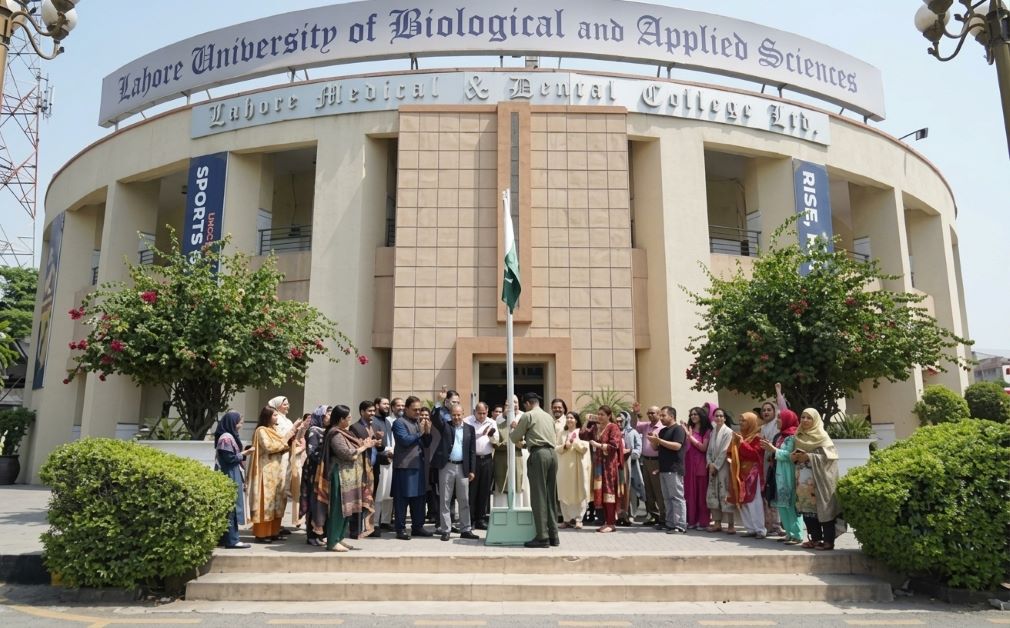
UBAS is short for Lahore University of Biological and Applied Sciences. It’s a private university, set up by the Punjab government’s charter, part of the Punjab Group of Colleges. Boys and girls study together in every program — the university’s own rules say no one gets turned away because of gender, religion, or where they’re from.
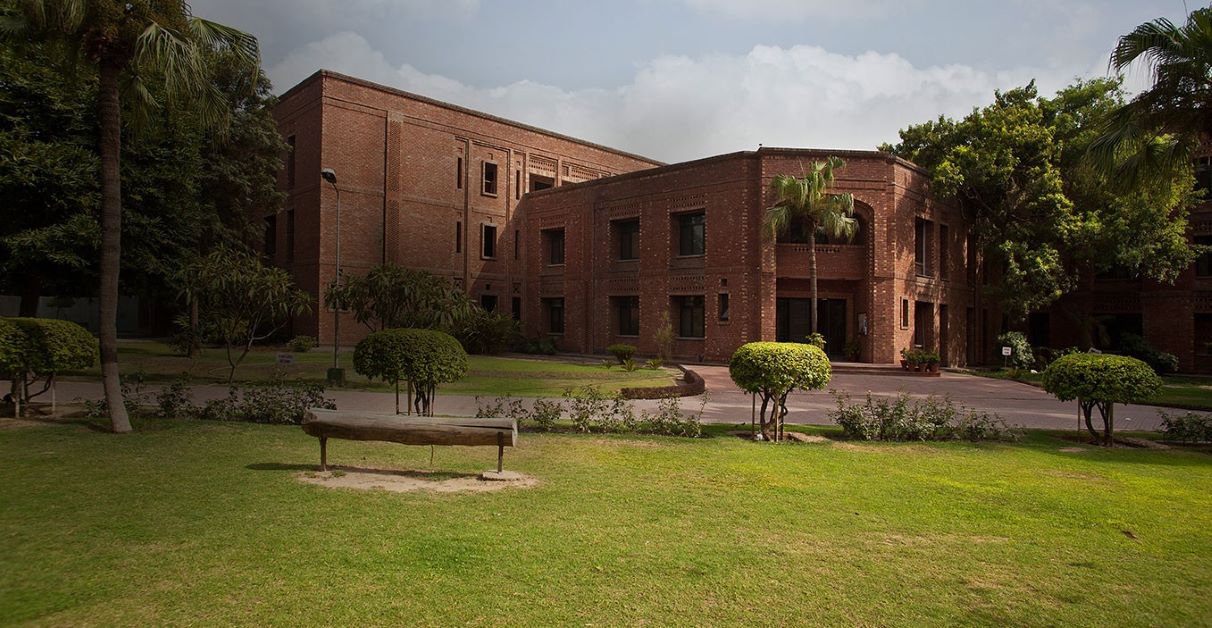
The campus is about 120 kanals, near Lahore’s canal, roughly 30 minutes from the city centre. It started in 1997 as Lahore Medical & Dental College (LMDC), and later grew into its own university with 8 faculties and about 23 programs, all HEC-approved.
The one big thing that sets UBAS apart: a 1,100-bed hospital sits right on campus. Students in Pharm-D, Physical Therapy, and other health courses work with real patients there, not just in a mock lab.
Is It Right For You?
If you want a health-focused degree with real hands-on hospital work, UBAS is worth a serious look. If you want a big social campus with dorms and a huge student body, it’s not that — the campus is smaller and more focused. The new Computer Science, AI, and Data Science courses are a good option if you like this campus’s size but still want a tech degree, though they’re too new to have a long track record yet.
All the Degrees, by Faculty
Pharmacy — Pharm-D (5 years), BS Aesthetics & Cosmetology (4 years), MPhil Pharmacy Practice (2 years), PhD Pharmacy Practice.
Allied Health — BS Anesthesia Technology, BS Medical Lab Technology, BS Radiography & Imaging, BS Operation Theatre Technology, BS Medical Ultrasound & Sonography, BS Dental Hygiene. All 4 years.
Food & Nutrition — BS Human Nutrition & Dietetics (4 years), MPhil Human Nutrition & Dietetics (2 years).
Social Sciences — BS Clinical Psychology (4 years).
Biological Sciences — BS Biotechnology, BS Forensic Science, BS Human Genetics & Molecular Biology (4 years each), plus MPhil Biotechnology.
Rehab Sciences — Doctor of Physical Therapy (5 years), MS Physical Therapy, PhD Physical Therapy.
Computing — BS Computer Science, BS Artificial Intelligence, BS Data Science (4 years each).
Nursing — BS Nursing (4 years), Post-RN BSN for nurses who already have their license (usually 2 years).
Two things worth knowing: MBBS and BDS are run under the older LMDC name (lmdc.edu.pk), not the general UBAS list — so if you want a medical or dental degree, go there directly. Also, some old blog posts online still mention Microbiology or Food Science & Technology as separate degrees. Those aren’t offered right now, so don’t rely on old lists — always check the live degree page.
How Much It Costs
UBAS university charges by credit hour, and the rate changes a lot by program. Here’s what’s on the official fee pages right now:
| Program | Fee per Credit Hour | Total Credit Hours | Full Cost with Admission Fee |
|---|---|---|---|
| Pharm-D | PKR 14,000 | 195 | ~PKR 2,755,000 |
| Physical Therapy (DPT) | PKR 13,889 | 175 | ~PKR 2,455,555 |
| Human Nutrition & Dietetics | PKR 10,294 | 138 | ~PKR 1,445,588 |
| Biotechnology | PKR 10,000 | 130 | ~PKR 1,325,000 |
| Clinical Psychology | PKR 10,000 | 125 | ~PKR 1,275,000 |
| Medical Lab Technology | PKR 9,000 | 139 | ~PKR 1,276,000 |
| Computer Science | PKR 12,000 | 130 | ~PKR 1,585,000 |
Admission fee is PKR 25,000 flat for all programs, already added into the numbers above. If your program isn’t on this list, check its own fee page — don’t guess based on a similar-sounding one.
Want to pay in parts instead of one big lump sum? UBAS university doesn’t post a fixed rule for this. If money is tight, go to the accounts office and ask directly — bring proof of your family’s income, and they can often work out a split payment for the semester. It’s not something you get just by asking without paperwork.
Getting In, Step by Step
- Go to the UBAS admission portal and make an account.
- Pick your program and fill in your school records.
- Pay the processing fee online.
- Upload these documents: your Matric and FSc marksheets (or O/A-Level certificate with IBCC equivalence), your CNIC or B-Form, and passport-size photos.
- Take the entry test or interview for your program, if one is required.
- Wait for your result and merit list update from the portal.
What marks you need: Pharm-D and DPT ask for at least 60% in FSc Pre-Medical. Most other BS programs need around 45–50% in Intermediate — ICS and Pre-Engineering students are usually accepted too, just check the specific program page. Computer Science wants Math in Intermediate, but Pre-Medical students can still join — you just take an extra math course in first year to catch up.
How merit is worked out: it’s a mix of your Matric marks, your Intermediate marks, and your test/interview score. Intermediate counts for the most. The exact split changes a bit by program, so read your program’s own page.
There’s no fixed date every year for when applications open or close — UBAS announces each intake separately, usually a couple of months before classes start. Keep checking the admissions page close to when you plan to apply so you don’t miss the last date.
Scholarships — What You Can Actually Get
The merit scholarship is based on your FA/FSc percentage:
- 85% and above: full tuition waiver (100%)
- 80%: 75% off tuition
- 75%: 50% off tuition
- 70%: 25% off tuition
Example: if you scored 82% in FSc, you’d get a 75% waiver in your first semester.
Here’s the catch most students miss: to keep that waiver every semester after the first, you need a CGPA of 3.95 or higher — out of a 4.0 scale. That’s close to a perfect record. A lot of students who start with a full waiver lose part of it later if even one semester slips.
Below 70%? You can still apply for need-based financial help. This is handled by Punjab Group management directly, and you’ll need to show proof of your family’s income to be considered.
Life on Campus
There are no big hostels run by UBAS university itself. Most out-of-town students rent private hostels nearby, close to the canal and Raiwind Road area. A shared room in a private hostel in that part of Lahore usually runs somewhere between PKR 15,000 and 30,000 a month, though exact prices depend on the hostel and how many students share a room — always visit and check before booking. University buses do run set routes to Thokar Niaz Baig, Johar Town, Wapda Town, and Model Town, which helps if you’re commuting daily instead of staying in a hostel.
On security: the shared campus has round-the-clock guards and hundreds of CCTV cameras, based on what the university lists for its facilities. Still, since student housing is private and off-campus, ask specific safety questions about the hostel itself when you visit — the university’s security covers the campus, not necessarily every private hostel nearby.
For labs: UBAS university says it has 18 specialized labs — for anesthesia, radiography, biotechnology, and forensic work, not just basic teaching labs. Class sizes are small too, about 12 students for every teacher, which means more one-on-one time than you’d get at a bigger university.
Good points: real hospital experience, small classes, strong labs for health science students. Weak points: no big on-campus hostel, smaller social life than a bigger university, and the tech programs are new with no track record yet.
Jobs After Graduating
Pharm-D graduates usually go into hospital pharmacies, drug companies, or government drug-checking bodies. Starting pay is roughly PKR 45,000 to 75,000 a month. DPT graduates go into hospitals, rehab clinics, sports clinics, or open their own practice later — similar or slightly higher starting pay. Allied health and nutrition graduates mostly work in labs, hospitals, or public health programs. These numbers move around depending on the city and the employer, so treat them as a starting guide, not a guarantee.
How It Compares to Other Options
- University of Health Sciences (UHS), Lahore — public university, much cheaper, but getting in needs a very high entry test score.
- Superior University (Raiwind Road) — nearby, but offers business and engineering too, if you don’t want to limit yourself to health sciences.
- University of Lahore (UOL) — bigger campus with more history in medical courses, but a much bigger student body, so less personal attention than UBAS’s small class sizes.
Questions Students Actually Ask
Yes. The university lists all 23 of its programs as HEC-approved.
LMDC came first and still runs MBBS and BDS on its own website. UBAS university grew out of LMDC and now covers pharmacy, allied health, biology, nursing, and computing.
Yes, in every program. The admission rules say no one is refused based on gender, religion, or hometown.
There’s no single fixed date every year — check the admissions page a few months before you want to start, since each intake is announced separately.
Most programs need either a written test or an interview, and it counts toward your final merit score along with your school marks.
It depends on the program. Roughly PKR 1.27 million for something like Medical Lab Technology, up to about PKR 2.76 million for Pharm-D. See the fee table above.
The merit scholarship starts at 70% in Intermediate. Below that, your only option is applying for need-based aid.
Yes. You need a 3.95 CGPA every semester to keep the full waiver, which is hard to maintain.
Depends on your degree. Pharm-D and DPT lead to hospitals and clinics. Allied health and nutrition degrees lead to labs and public health jobs.
No large hostels run by the university. Students use nearby private hostels, and university buses cover major routes in Lahore.
The shared campus has guards and CCTV cameras. Since hostels are private and off-campus, check hostel-specific safety when you visit, since that’s separate from campus security.
Yes, but you’ll likely need to take an extra math course in your first year to catch up.
Yes, UBAS university has a refund policy, but the amount you get back usually goes down the later in the semester you leave. Ask the admissions office for the exact numbers before you pay.
Health-course students like Pharm-D and DPT do real clinical hours there as a required part of their course — it’s not optional extra practice.
Visit ubas.edu.pk or use the admission portal directly. Fees and program details change, so always confirm there before you decide anything final.