
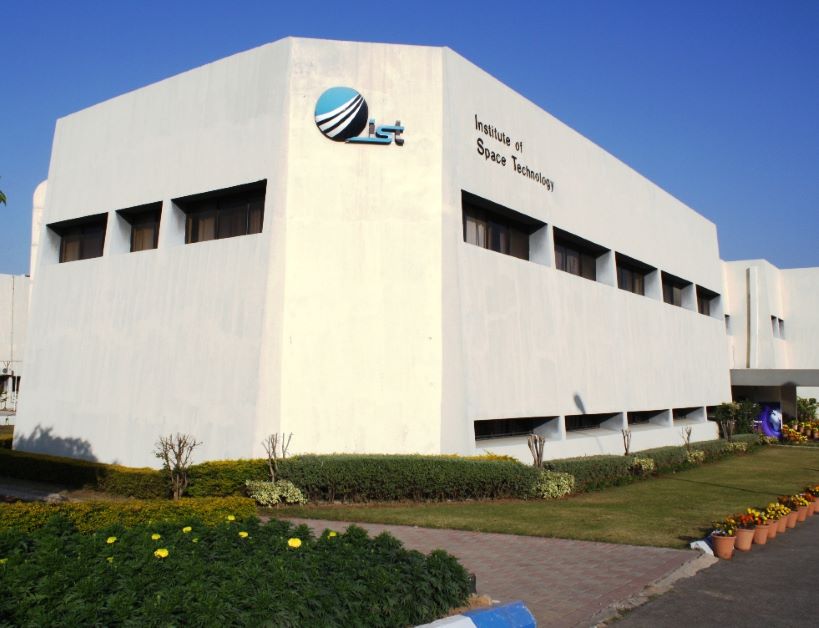
The Institute of Space Technology (IST) is a public-sector higher education institution in Islamabad, Pakistan, specializing in space science, engineering, and related technologies. Established in September 2002, IST aims to prepare students for scientific and technological careers through quality education, research, and innovation.
The institute offers undergraduate, postgraduate, and doctoral study options. Students interested in aerospace engineering, electrical engineering, and other science and technology fields should review the latest programme list, admission criteria, fee structure, and scholarship opportunities before applying.
About the Institute of Space Technology Islamabad
The Institute of Space Technology was established in 2002 to promote education in space science and allied fields. It initially offered undergraduate programmes in Aerospace Engineering and Communication Systems Engineering. In Fall 2008, it introduced a bachelor’s programme in Materials Science and Engineering and a graduate programme in Communication Engineering. In Fall 2011, Electrical Engineering replaced Communication Systems Engineering at the undergraduate level, according to the supplied institutional profile.
IST is listed as a public university recognized by the Higher Education Commission (HEC). The supplied profile also identifies the Pakistan Engineering Council (PEC) as an accrediting body. Students applying to engineering programmes should confirm the current PEC accreditation status of their specific programme.
The institute’s vision is to achieve national academic leadership through quality education, innovation, and outreach. Its mission focuses on developing skilled and forward-thinking graduates who can address scientific and technological challenges and contribute to Pakistan’s development.
Programs and Degrees at IST Islamabad
The supplied profile lists bachelor’s, master’s, and PhD study options at IST. The available programmes, eligibility criteria, and degree duration depend on the discipline and current academic regulations.
Bachelor’s Degree Programs
Bachelor’s programmes generally take four years to complete. IST has offered undergraduate education in areas such as Aerospace Engineering, Materials Science and Engineering, and Electrical Engineering. Applicants should consult the current undergraduate prospectus for the complete list of available degrees.
Students interested in engineering and space-related fields should compare course content, laboratory facilities, research opportunities, and career requirements before selecting a programme.
Master’s Degree Programs
Master’s programmes listed in the supplied profile have a typical duration of two years. IST has also offered graduate-level study in engineering disciplines, including Communication Engineering.
Applicants should check the current postgraduate programme list for specializations, entry requirements, minimum academic qualifications, and any required admission test or interview.
PhD Programs
The supplied profile lists a duration of three to five years for PhD programmes. Doctoral study generally focuses on advanced research in a specialized subject. Applicants should confirm available research areas, supervisor availability, admission requirements, and the current degree completion regulations directly with IST.
Institute of Space Technology Fee Structure
The fee structure at IST varies by degree level and programme. The supplied profile does not include exact tuition fees or additional charges, so students should consult the official fee schedule for current figures.
For undergraduate fee details, visit the official IST BS Programs Fee Structure page.
Before applying, students should confirm:
- Tuition fees per semester
- Admission and registration charges
- Examination and other applicable fees
- Payment deadlines and refund policies
- Any additional costs associated with laboratories or other academic requirements
Postgraduate and doctoral applicants should check the relevant fee details for their specific programmes rather than relying on undergraduate fee information.
IST Admissions and How to Apply
Admission to the Institute of Space Technology depends on the selected programme and the requirements announced for the relevant academic session. Students should review the latest admission notice before submitting an application.
Steps to Apply
- Visit the official website: Check the latest admissions announcement and available degree programmes.
- Select a programme: Review the curriculum, eligibility criteria, and career relevance of your preferred degree.
- Check admission requirements: Confirm the required previous qualification, minimum marks or CGPA, and any applicable entry-test requirements.
- Complete the application: Follow the instructions provided through IST’s official admission process.
- Prepare the required documents: These may include academic certificates, transcripts, identification documents, photographs, and other documents specified in the admission notice.
- Pay the applicable fee: Follow the official instructions for any application or processing fee.
- Check merit lists and updates: Monitor official announcements for selection results, fee submission deadlines, and further instructions.
Entry-test requirements, merit calculations, application deadlines, and programme-specific eligibility criteria may change. Applicants should verify these details directly with IST for the session in which they plan to apply.
Scholarships at the Institute of Space Technology
The supplied profile lists merit scholarships for undergraduate and postgraduate students, along with PEEF and sports scholarships. Eligibility and availability should be confirmed with the institute because scholarship policies may change between academic sessions.
Merit Scholarships for BS Students
The supplied profile lists a threshold of more than 90% marks in Intermediate for merit scholarships for bachelor’s students. Students should confirm whether this threshold applies to the current scheme and whether additional conditions, limited awards, or competitive selection requirements apply.
Merit Scholarships for MS Students
The supplied profile lists a CGPA above 3.75 for master’s-level merit scholarships. Applicants should verify the applicable grading criteria, semester requirements, and continuation conditions with the relevant department.
PEEF Scholarships
The supplied profile identifies PEEF scholarships for students with financial need. Students should confirm whether the relevant PEEF scheme is available for their programme and what household-income, academic, and domicile conditions apply.
Sports Scholarships
The supplied profile also lists sports scholarships. However, it does not provide detailed eligibility criteria or confirm the current award conditions. Students should contact IST to ask about available sports-related financial assistance and any performance or selection requirements.
Scholarships may be competitive and are not necessarily guaranteed solely by meeting a listed academic threshold.
Campus Life, Research and Career Opportunities
IST’s academic focus on space science, engineering, and related technologies may suit students interested in scientific research and technical careers. Its stated mission emphasizes developing graduates who can respond to emerging scientific and technological challenges.
Academic and Research Environment
Before choosing IST, applicants should review the facilities and research opportunities available in their selected department. Useful points to investigate include laboratory access, faculty research areas, final-year projects, industry collaboration, internships, and opportunities to participate in research activities.
Students should also confirm the availability of campus accommodation, transport, student societies, sports facilities, and other services directly with the institute instead of assuming that every facility is available to all students.
Career Opportunities After Graduation
Career paths depend on the degree, practical skills, experience, and employer requirements. Depending on their qualifications and specialization, graduates may explore opportunities in areas such as:
- Aerospace and engineering industries
- Electrical and communications engineering
- Materials science and related industrial sectors
- Research and development
- Space science and technology-related organizations
- Teaching and higher education
- Further postgraduate or doctoral study
Some technical roles require specific professional accreditation, licensing, or additional qualifications. Engineering students should check the relevant professional requirements for their chosen career.
Conclusion
The Institute of Space Technology Islamabad is an option for students interested in space science, engineering, research, and related technical fields. Its academic focus and range of study levels may appeal to students planning careers in scientific and engineering disciplines. Before applying, confirm the current programme catalogue, admission criteria, fees, scholarship availability, and accreditation status of your selected degree through official sources.