

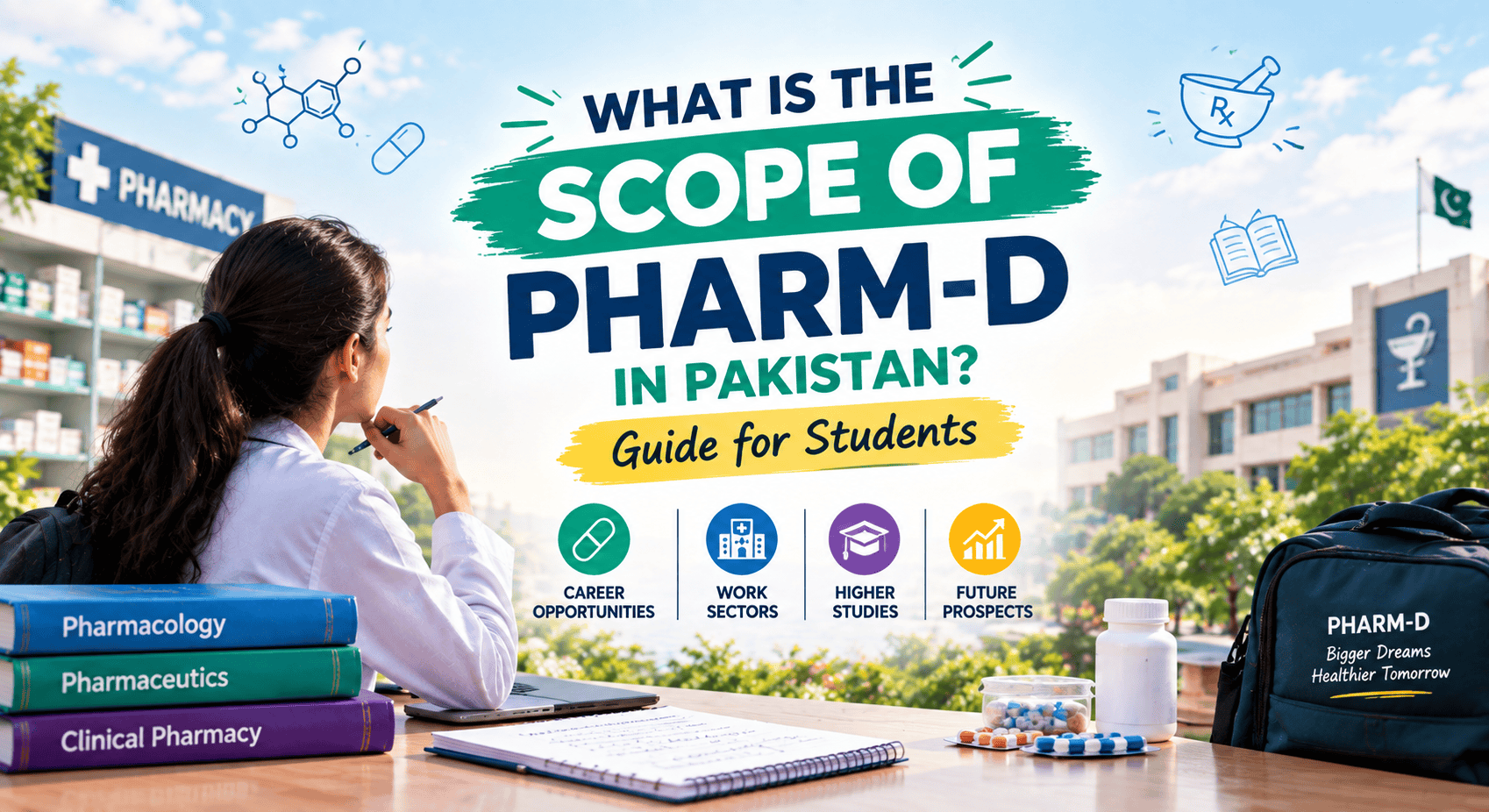
Choosing a degree after FSc Pre-Medical can be challenging, especially for students who want to build a career in healthcare but are exploring options beyond MBBS and BDS. One option worth considering is the Doctor of Pharmacy (Pharm-D), a professional degree focused on medicines, their safe use, drug development, and patient care.
The scope of Pharm-D in Pakistan includes opportunities in hospitals, pharmaceutical companies, community pharmacies, drug regulatory organizations, research institutions, and educational institutes. However, career opportunities depend on a student’s skills, practical experience, specialization, and the availability of relevant jobs.
If you are planning to pursue Pharm-D, this guide explains its subjects, eligibility, career options, salary considerations, and future prospects in Pakistan.
What Is Pharm-D?
Pharm-D stands for Doctor of Pharmacy. It is a professional degree that prepares students to understand medicines, their effects on the human body, appropriate use, possible side effects, and interactions with other drugs.
Pharmacists help ensure that medicines are stored, prepared, dispensed, and used safely. Depending on their workplace and responsibilities, they may also provide medication-related guidance, monitor drug safety, support clinical teams, or work in pharmaceutical manufacturing and quality control.
In Pakistan, Pharm-D is generally a five-year degree programme. Students study pharmaceutical sciences alongside subjects related to human health, medicine, and patient care.
It is important to understand that Pharm-D is different from MBBS. Pharm-D graduates qualify for pharmacy-related professional roles, subject to applicable registration requirements. The degree does not qualify graduates to practise as medical doctors.
What Is the Eligibility Criteria for Pharm-D in Pakistan?
Students who have completed intermediate education in the Pre-Medical group can generally apply for Pharm-D programmes. However, admission requirements vary by university, so applicants should check the current criteria before submitting an application.
Common admission requirements include:
- Educational qualification: FSc Pre-Medical or an equivalent qualification recognised by the relevant authorities.
- Minimum marks: Universities set their own minimum percentage requirements, which students must verify from the latest admission notice.
- Merit criteria: Some institutions consider intermediate marks, entry tests, or other admission requirements when preparing merit lists.
- Required documents: Applicants may need academic certificates, identification documents, photographs, and an equivalence certificate if they completed an equivalent qualification.
Students should also verify whether the university and its Pharm-D programme meet the applicable recognition and approval requirements.
Before applying, consult the official Pharmacy Council of Pakistan website and the university’s admission office for current information.
Pharm-D Subjects in Pakistan
The Pharm-D curriculum combines theoretical knowledge with laboratory work, practical training, and learning about the safe and effective use of medicines. The exact course structure can vary between institutions and according to the applicable curriculum.
Some major Pharm-D subjects include:
| Subject | What Students Learn |
| Pharmaceutics | How medicines are formulated, prepared, and delivered. |
| Pharmacology | How drugs work in the body and produce therapeutic effects. |
| Pharmaceutical Chemistry | The chemical properties, composition, and analysis of drugs. |
| Pharmacognosy | Medicines and drug substances obtained from natural sources. |
| Clinical Pharmacy | How pharmacists support appropriate medication use in patient care. |
| Hospital Pharmacy | Medicine management and pharmacy services in healthcare facilities. |
| Pharmacotherapy | The use of medicines to manage diseases and health conditions. |
| Pharmaceutical Microbiology | Microorganisms and their relevance to pharmaceutical products. |
| Pharmaceutical Analysis | Methods used to test the identity, quality, and purity of medicines. |
| Pharmacy Practice | Professional responsibilities, patient counselling, and safe dispensing. |
Students also develop practical skills through laboratory activities, projects, and relevant clinical or professional training.
What Is the Scope of Pharm-D in Pakistan?
The scope of Pharm-D extends across several healthcare and pharmaceutical sectors. Graduates can explore different career paths depending on their interests, competencies, registration status, and available positions.
1. Hospital Pharmacist
Hospital pharmacists work in healthcare facilities where medicines are prescribed, stored, dispensed, and monitored. Their responsibilities may include reviewing medication orders, checking potential drug interactions, supporting medicine management, and providing information about appropriate drug use.
In settings with established clinical pharmacy services, pharmacists may also collaborate with doctors and nurses to improve medication safety.
Potential workplaces: Public hospitals, private hospitals, teaching hospitals, and specialised healthcare centres.
2. Community Pharmacist
Community pharmacists work in retail pharmacies and other community-based pharmacy settings. They help patients access medicines, understand their proper use, and recognise potential safety concerns.
Their responsibilities may include dispensing medicines in accordance with applicable laws, explaining dosage instructions, identifying possible interactions, and referring patients to other healthcare professionals when necessary.
Graduates interested in this field may explore employment in established pharmacy chains or other licensed pharmacy businesses.
3. Pharmaceutical Industry
Pakistan’s pharmaceutical sector offers several career paths for Pharm-D graduates. Companies need professionals who understand medicines, manufacturing processes, product quality, and regulatory requirements.
Depending on the employer and role, graduates may work in:
- Production: Supporting pharmaceutical manufacturing processes.
- Quality control: Testing raw materials and finished products.
- Quality assurance: Helping maintain manufacturing standards and documentation.
- Regulatory affairs: Preparing and maintaining documents required for product registration and regulatory compliance.
- Research and development: Supporting formulation development and product improvement.
Some positions may require additional technical knowledge, specialised training, or relevant industry experience.
4. Clinical Pharmacy
Clinical pharmacy focuses on the safe and effective use of medicines in patient care. Clinical pharmacists may review medication regimens, identify potential drug-related problems, and provide medicine-related recommendations to healthcare teams within their professional responsibilities.
This field can interest graduates who enjoy patient interaction, pharmacotherapy, and working alongside other healthcare professionals.
However, clinical pharmacy opportunities and the responsibilities assigned to pharmacists vary between hospitals and healthcare systems in Pakistan.
5. Drug Regulatory Affairs
Pharmaceutical products must meet applicable requirements relating to safety, quality, manufacturing, labelling, and registration. Regulatory affairs professionals help companies understand and comply with these requirements.
Pharm-D graduates may pursue roles involving product registration, regulatory documentation, compliance, and communication with relevant authorities.
This career path can suit students who are interested in pharmaceutical regulations, documentation, and the legal requirements governing medicines.
6. Pharmacovigilance and Drug Safety
Pharmacovigilance involves monitoring, assessing, and reporting suspected adverse effects and other medicine-related safety concerns.
Professionals working in this area may help review safety reports, maintain records, identify potential risks, and support the monitoring of pharmaceutical products after they enter the market.
Pharm-D graduates interested in drug safety can explore opportunities with pharmaceutical companies, research organisations, and other employers that maintain pharmacovigilance functions.
7. Medical Information and Pharmaceutical Marketing
Pharmaceutical companies also employ professionals who communicate scientific information about medicines to healthcare professionals and other relevant audiences.
Possible roles include medical information officer, product executive, medical representative, and pharmaceutical sales professional. Specific job titles and requirements differ between employers.
These positions may involve explaining product information, responding to medicine-related enquiries, maintaining professional relationships, and following applicable promotional and ethical standards.
Students considering this path should assess whether they enjoy communication, presentations, and working in a commercial environment.
8. Research and Clinical Trials
Pharm-D graduates can explore research-related careers in pharmaceutical development, clinical research, drug safety, and related areas.
Depending on the position, responsibilities may include assisting with research documentation, reviewing study information, supporting clinical trial operations, or contributing to medicine-related research projects.
Some research roles require additional qualifications or training in clinical research methods, research ethics, data management, or related disciplines.
Students who enjoy scientific investigation may also consider postgraduate education to develop expertise in a particular research area.
9. Teaching and Academia
Graduates interested in education can explore academic careers in pharmacy colleges and universities. Entry-level opportunities and teaching responsibilities depend on institutional requirements and the qualifications required for the position.
For many university teaching and research careers, an MPhil, MS, or PhD in a relevant field may be required or preferred.
Possible areas of academic specialisation include pharmacology, pharmaceutics, pharmaceutical chemistry, clinical pharmacy, and pharmacognosy.
10. Government Jobs
Pharm-D graduates may find relevant vacancies in public-sector hospitals, drug regulatory organisations, government pharmaceutical facilities, and other public institutions.
The availability of these positions depends on recruitment announcements, approved vacancies, eligibility criteria, and applicable registration requirements.
Students should not assume that every government vacancy accepts Pharm-D graduates. Always read the official job advertisement carefully and check the required qualifications, age limits, experience, and application procedure.
What Is the Salary of a Pharm-D Graduate in Pakistan?
The salary of a Pharm-D graduate in Pakistan varies according to the employer, city, job role, professional experience, and technical skills. A fresh graduate working in a retail pharmacy may receive a different salary from someone employed in pharmaceutical manufacturing, regulatory affairs, or a specialised hospital role.
Instead of relying on a single salary figure, students should compare current vacancies for the specific career paths they are considering.
| Career Path | Factors That Can Affect Earnings |
| Hospital pharmacist | Hospital type, experience, and responsibilities |
| Community pharmacist | Employer, location, working hours, and duties |
| Pharmaceutical production | Company size, technical skills, and experience |
| Quality assurance or control | Testing knowledge, compliance skills, and experience |
| Regulatory affairs | Documentation skills, regulatory knowledge, and seniority |
| Clinical research | Research experience, employer, and project responsibilities |
| Academia | Qualifications, institution, and teaching experience |
Fresh graduates should also consider whether a role offers structured training, practical exposure, professional development, and opportunities for progression.
Important: Salaries change over time, and individual vacancies may offer substantially different packages. Check recent job advertisements and confirm compensation directly with employers before making a career decision.
Is Pharm-D Better Than MBBS in Pakistan?
Pharm-D and MBBS are different professional degrees with different areas of focus. Neither should be selected solely because of its title or perceived earning potential.
MBBS prepares students for a medical career focused on diagnosing and treating patients within the scope of medical practice. Pharm-D focuses on medicines, pharmaceutical sciences, medication safety, and pharmacy practice.
| Factor | Pharm-D | MBBS |
| Main focus | Medicines, drug safety, and pharmacy practice | Medical diagnosis and treatment |
| Typical duration | Five years | Typically five years, followed by applicable house job and registration requirements |
| Career paths | Hospital pharmacy, industry, community pharmacy, research, and regulatory affairs | Medical practice, hospital services, and further medical specialisation |
| Work settings | Pharmacies, hospitals, pharmaceutical companies, laboratories, and research organisations | Hospitals, clinics, medical institutions, and other healthcare settings |
| Suitable interests | Drug science, pharmaceutical research, medicine management, and pharmacy services | Clinical medicine, patient diagnosis, and medical treatment |
Students should also compare admission requirements, total educational costs, practical training, professional registration, and the nature of day-to-day work in each field.
What Is the Future Scope of Pharm-D in Pakistan?
The future scope of Pharm-D depends on developments in healthcare, pharmaceutical manufacturing, medicine regulation, research, and pharmacy services.
Several areas may offer opportunities for graduates who develop relevant skills.
Pharmaceutical manufacturing and quality systems: Pharmaceutical companies need professionals who understand product quality, documentation, manufacturing processes, and regulatory compliance.
Medication safety: Greater attention to appropriate medicine use creates a continuing need for professionals who can identify medication-related risks and support safe dispensing and monitoring.
Clinical pharmacy services: Hospitals that develop clinical pharmacy departments may offer opportunities for pharmacists with strong pharmacotherapy knowledge and practical patient-care skills.
Research and drug safety: Research organisations and pharmaceutical companies may recruit professionals for clinical research, pharmacovigilance, and related activities.
Digital health and data management: Healthcare technology is creating new ways to manage health information and support research. Pharmacists with additional knowledge of data handling, digital systems, and research methods may be able to explore relevant roles.
These areas represent potential career directions, not a guarantee of employment. Actual opportunities depend on local demand, employer requirements, professional regulation, and the graduate’s qualifications and experience.
What Skills Should Pharm-D Students Develop?
A degree provides the academic foundation, but students also need practical and professional skills to compete for suitable positions.
Consider developing the following:
- Communication skills: Explain medicine-related information clearly to patients and healthcare professionals.
- Pharmacology knowledge: Understand drug actions, adverse effects, contraindications, and interactions.
- Attention to detail: Work carefully with prescriptions, medicine records, laboratory results, and regulatory documents.
- Computer skills: Learn relevant office software, digital record systems, and data-management tools.
- Research skills: Develop the ability to read scientific literature, interpret evidence, and prepare reports.
- Professional ethics: Understand patient confidentiality, responsible medicine use, and professional boundaries.
- Practical experience: Participate in supervised training, relevant internships, and professional development activities.
Students should use their university’s training opportunities to explore different pharmacy settings before choosing a specialisation.
How to Choose a Pharm-D University in Pakistan
Selecting the right institution is an important part of planning a pharmacy career. Before submitting an application, compare the following factors.
- Recognition and approval: Confirm that the institution and its Pharm-D programme meet the applicable requirements of the Pharmacy Council of Pakistan and other relevant authorities.
- Admission criteria: Check the latest eligibility rules, merit requirements, entry tests, and application deadlines.
- Laboratory facilities: Review the availability of laboratories and practical learning resources relevant to pharmaceutical sciences.
- Clinical and professional training: Ask about hospital placements, supervised training, internships, and other practical learning arrangements.
- Faculty and curriculum: Review the programme structure, teaching resources, and academic support available to students.
- Total cost: Compare tuition fees, admission charges, transport, accommodation, and other expenses.
- Career support: Ask whether the institution provides career guidance, internship support, research opportunities, or links with relevant employers.
Do not choose a university based only on advertising or a general claim about employment prospects. Verify the current programme status and request official information before paying admission fees.
Final Thoughts
The scope of Pharm-D in Pakistan extends beyond working at a retail pharmacy. Graduates can explore opportunities in hospitals, pharmaceutical manufacturing, quality assurance, regulatory affairs, clinical research, drug safety, academia, and other related fields.
However, career outcomes are not the same for every graduate. Students should consider their interests, the quality of practical training, university recognition, professional registration requirements, and the availability of jobs in their preferred sector.
If you enjoy learning about medicines, understanding how drugs work, and contributing to safe and effective healthcare, Pharm-D may be a suitable option to explore. Research universities carefully and review current job requirements before deciding whether this degree matches your long-term goals.