

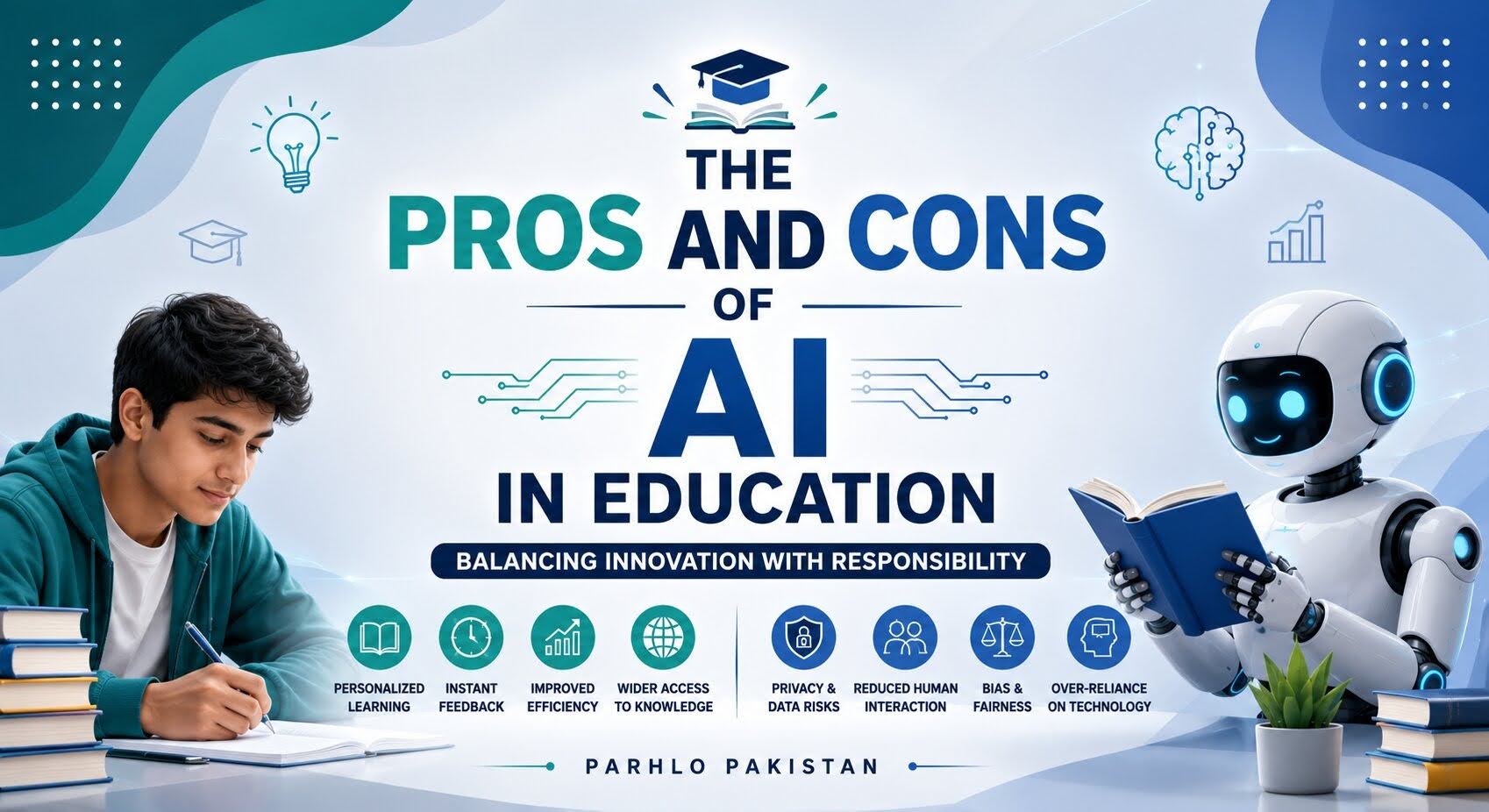
Artificial intelligence has moved from the edges of the classroom to the center of the conversation in education. From personalized tutoring apps to AI-generated lesson plans and automated grading, schools and universities are adopting these tools faster than most institutions can write policy for them.
A 2024 UNESCO global survey found that fewer than 10% of schools and universities had formal guidance on AI use — even as adoption among students and teachers kept climbing. That gap between usage and guidance is exactly why understanding both sides of this technology matters.
Like any major shift in education technology, AI brings real benefits — and real risks that students, teachers, and administrators can’t afford to ignore. Here’s a balanced, practical look at both.
The Benefits
1. Personalized Learning at Scale
One of AI’s biggest strengths is adapting to individual students rather than teaching to the middle of the class. Adaptive learning platforms can adjust the difficulty of problems in real time, revisit concepts a student is struggling with, and skip ahead for students who’ve already mastered the material.
For large classes where one teacher can’t give everyone individual attention, this kind of personalization was previously out of reach — and it’s one of the clearest, most measurable wins AI offers in education.
2. 24/7 Access to Help
AI tutors and chatbots don’t keep office hours. A student stuck on a homework problem at 11 p.m. can get an explanation immediately instead of waiting until the next class or study session. Students can also use Gemini for academic support, including understanding difficult concepts, working through questions, and preparing for study sessions.
This is especially valuable for students juggling jobs, family responsibilities, or classes across time zones, where traditional office hours simply don’t fit their schedule.
3. Reduced Administrative Burden on Teachers
Grading, drafting feedback, creating quiz questions, and building lesson plans all take significant time.
AI tools can handle a meaningful chunk of this routine work, freeing teachers to spend more time actually teaching, mentoring, and engaging with students one-on-one — the parts of the job that AI can’t replace.
4. Support for Students with Different Learning Needs
AI-powered tools can offer text-to-speech, real-time translation, simplified explanations, or alternative formats for students with disabilities, language barriers, or different learning styles.
This can make coursework more accessible without requiring a fully custom curriculum for every student, closing gaps that used to require significant extra resources to address.
5. Faster, More Targeted Feedback
Instead of waiting days or weeks for graded work to come back, students can get instant feedback on writing, math problems, or code.
Faster feedback loops generally help students correct mistakes and build understanding before misconceptions become habits — which matters more in cumulative subjects like math and language learning than almost anywhere else.
The Risks
1. Over-Reliance and Weakened Critical Thinking
If students lean on AI to generate answers, essays, or code without engaging with the underlying material, they risk skipping the productive struggle that builds real understanding.
Educators worry that outsourcing too much thinking to AI could weaken skills like problem-solving, analysis, and independent reasoning over time — skills that don’t show up as a grade until much later.
2. Academic Integrity Challenges
AI-generated essays and solutions have made plagiarism and cheating harder to detect using traditional methods. Institutions are still catching up with clear policies, reliable detection tools, and consistent enforcement, which creates gray areas for both students and instructors — and inconsistent consequences from class to class.
3. Bias and Inaccuracy
AI models can produce inaccurate information stated with total confidence, and they can reflect biases present in their training data. In an educational setting, this is particularly risky: students may not have the background knowledge yet to recognize when an AI tool has gotten something wrong or presented a skewed perspective, especially on unfamiliar topics.
4. Data Privacy Concerns
Many AI education tools collect data on student performance, behavior, and even personal information. Questions about who owns this data, how it’s stored, and how it might be used or shared down the line are still largely unresolved — a concern regulators and school boards are actively working through.
5. Widening the Digital Divide
Not every student has equal access to reliable internet, updated devices, or premium AI tools. If the most effective AI-powered resources sit behind paywalls or require strong infrastructure, the technology meant to level the playing field could end up widening the gap between well-resourced and under-resourced students.
6. Reduced Human Interaction
Learning isn’t just about information transfer — mentorship, discussion, and social interaction with teachers and peers play a major role in development. Heavy reliance on AI tools risks reducing these human touchpoints, which can be especially important for younger students still developing social and communication skills.
7. Job and Skill Uncertainty for Educators
As AI takes over more routine teaching tasks, there are open questions about how the role of the teacher will evolve, what new skills educators will need, and how job security in the field might be affected. This is an ongoing and unsettled conversation within the profession itself, and it shapes how willingly institutions invest in these tools.
Finding the Balance
AI in education isn’t a simple story of good versus bad — it’s a set of trade-offs that different schools, teachers, and students are navigating in different ways. The tools that offer the most benefit tend to be the ones used thoughtfully: as a supplement to teaching and learning, not a replacement for it.
Institutions that pair AI adoption with clear guidelines, digital literacy training, and ongoing evaluation are generally better positioned to capture the benefits while managing the risks.
As the technology keeps evolving, the conversation around AI in education is likely to keep evolving with it — and staying informed on both the upside and the downside is the best way for students, teachers, and parents to make good decisions about how these tools fit into learning.
Frequently Asked Questions
Neither, on its own — it depends on how it’s used. AI tends to help when it supports learning, like explaining a stuck concept or generating practice questions. It tends to hurt when it replaces learning, like writing an essay a student should have written themselves.
It depends entirely on the institution’s policy and how the tool is used. Using AI to brainstorm or check your own work is generally fine; submitting AI-generated work as your own without disclosure is typically considered academic dishonesty. Always check your school’s specific AI policy, since these vary widely.
Most educators and researchers don’t see this happening. AI can handle routine tasks like grading and answering basic questions, but mentorship, motivation, and nuanced human judgment remain difficult to replicate, and most institutions position AI as a support tool rather than a teacher substitute.
Use it to check reasoning rather than skip it — ask AI to explain a concept, quiz you, or review your draft, rather than asking it to produce the final answer or essay outright. This keeps the learning benefit while avoiding the main risks around integrity and critical thinking.
Approaches vary widely, but common steps include updated academic integrity policies, AI literacy training for both students and teachers, clearer data privacy rules for ed-tech vendors, and pilot programs to test tools before wider rollout. Many institutions are still actively developing these policies as adoption outpaces guidance.