
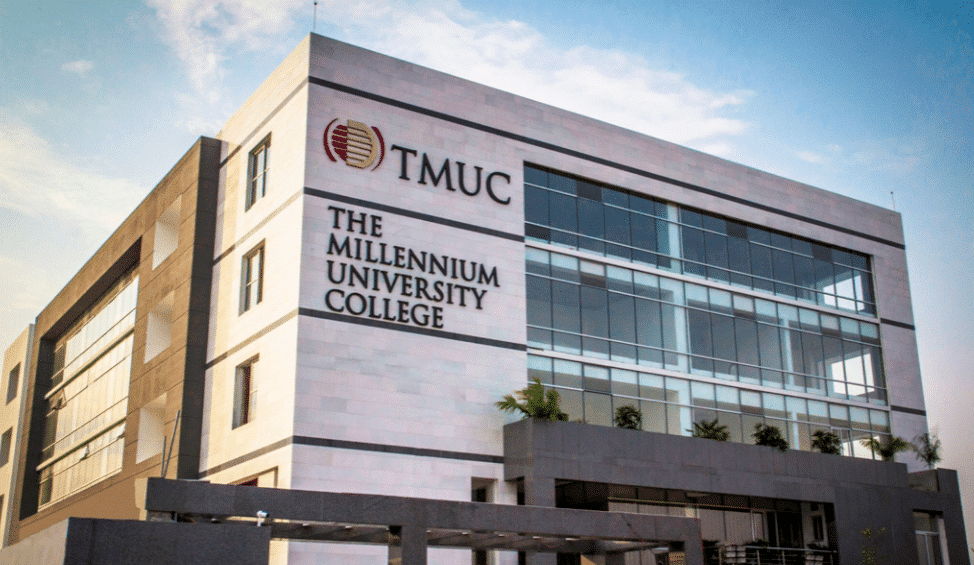
The Pakistan Bar Council (PBC) has recently issued notice regarding programs offered by The Millennium Universal College (TMUC) in Rawalpindi. The council issued a formal No Objection Certificate (NOC) exclusively for the 3 year LLB program of the University of Hertfordshire (UH), confirming its compliance with national legal education standards.
This NOC allows students enrolled in the LLB program to pursue professional licensing and practice law in Pakistan without facing legal or administrative obstacles. Meanwhile, the PBC discovered that TMUC was advertising the 2 year Higher National Diploma (HND) plus 1 year UK top-up programs without obtaining proper approval from the council.
Notice Issued to Withdraw HND Plus Top-Up Advertisement
In response, the Pakistan Bar Council issued a notice instructing the college to immediately withdraw all advertisements related to the HND plus top-up programs. The council emphasized that these programs do not fall under the PBC’s approved list and that promoting non-approved programs misleads prospective students about legal recognition.
The directive serves as a reminder that professional regulatory approval is mandatory in Pakistan before institutions advertise or offer foreign or transnational programs with potential legal or professional implications. Failure to comply with this requirement may lead to further regulatory action.
Implications for Students and Institutions
The PBC’s notice highlights the council’s vigilance in safeguarding legal education and protecting students professional futures. While TMUC’s 3 year LLB program is fully recognized and supported by the NOC, the HND plus top-up programs remain unapproved in the context of legal education.
Students must understand that enrollment in non-approved programs can impact their eligibility for professional licensing, especially if the program content overlaps with legal studies. Regulatory compliance ensures that graduates have proper recognition in Pakistan and that their qualifications meet both domestic and international standards.
TMUC’s International Collaborations
Millennium Universal College has established itself as a prominent provider of international programs in Pakistan, collaborating with the University of Hertfordshire to offer diverse programs in law, business, computing, and related disciplines.
The college promotes transnational education as a pathway for students to obtain international degrees without leaving Pakistan. However, regulatory bodies such as the Pakistan Bar Council maintain strict oversight to ensure programs involving professional qualifications meet all legal standards. The recent notice serves as a cautionary measure to maintain regulatory integrity.
Potential Consequences of Non-Compliance
The directive from the PBC may have further implications for TMUC, including potential withdrawal of NOCs for other campuses if non-compliant advertising continues. Additionally, the council has the authority to impose fines on institutions that promote unapproved programs, reinforcing the importance of adhering to legal and professional regulations. These measures protect students and uphold the credibility of Pakistan’s higher education and legal sectors, preventing misleading claims regarding program recognition.
Importance of Verification for Students
Students considering international programs such as the HND plus top-up pathway should carefully verify the approval status with both the Higher Education Commission (HEC) and the Pakistan Bar Council. While HEC recognition allows transnational delivery of foreign qualifications, the PBC specifically regulates programs that relate to law or professional practice.
Understanding these requirements is essential for students seeking both international degrees and professional recognition within Pakistan. Awareness and compliance can prevent future complications related to licensing or employment.
Role of Responsible Advertising in Higher Education
The issue also highlights the importance of responsible advertising in higher education. Institutions must clearly differentiate between programs that are approved and those that are not, ensuring that prospective students receive accurate information.
Misleading advertisements can create confusion, affect career decisions, and potentially result in penalties for the college. Regulatory bodies, including PBC, play a vital role in monitoring and enforcing compliance to protect student interests.
Parhlo Pakistan Coverage on Regulatory Updates
At Parhlo Pakistan, we provide readers with accurate, up to date information on educational regulations, program approvals, and professional guidance. Our platform ensures that students, parents, and educators are informed about regulatory actions, program recognition, and potential implications of transnational programs in Pakistan. By offering clear insights into developments such as the PBC notice to TMUC, we empower learners to make informed decisions about their academic and professional futures.
Conclusion
In conclusion, the Pakistan Bar Council’s issuance of the NOC exclusively for the 3 year LLB program of the University of Hertfordshire reaffirms TMUC’s compliance in the legal education sector. However, the notice against advertising the HND plus top-up programs underscores the importance of obtaining proper approval before promoting or offering international programs.
Students should remain vigilant and verify program recognition with relevant authorities, ensuring that their qualifications are both internationally respected and professionally recognized in Pakistan. Compliance, transparency, and awareness remain crucial for maintaining the integrity of higher education and protecting students professional prospects.