
University Type: Public University
Recognized By: Higher Education Commission (HEC)
Accredited By: Pakistan Engineering Council (PEC)
International Recognition: Washington Accord
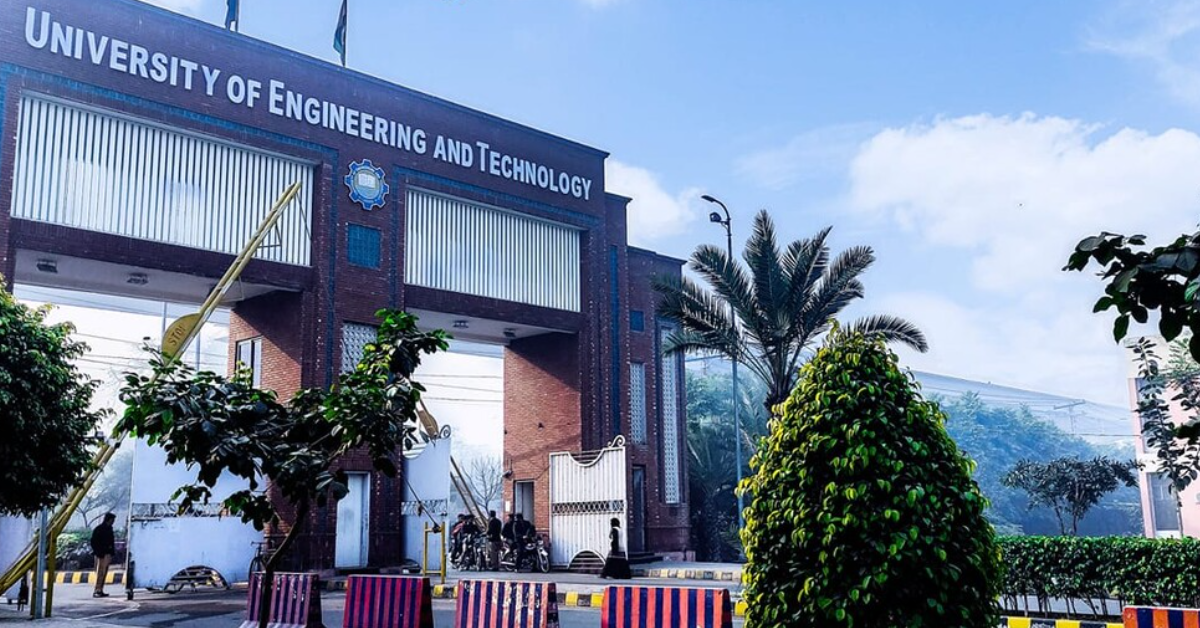
University of Engineering & Technology (UET) Lahore is one of Pakistan’s oldest and most respected engineering universities. Founded in 1921, it has played a major role in developing the country’s technical education and producing skilled engineers for more than a century.
The main campus is located on Grand Trunk (G.T.) Road near the historic Shalimar Gardens in Lahore. Over the years, UET has expanded with additional campuses in Kala Shah Kaku, Faisalabad, Narowal, and Gujranwala, making quality engineering education more accessible across Punjab.
UET is known for its strong academic environment, experienced faculty, and focus on practical learning. It continues to attract a large number of students every year who want to build careers in engineering, technology, and related fields.
Quick Answer:
UET Lahore is a leading public engineering university in Pakistan. It is recognized by HEC, accredited by PEC, and offers quality programs in engineering, computing, and applied sciences.
Why Choose UET Lahore?
Students prefer UET Lahore for several strong reasons:
- Long-standing reputation as one of Pakistan’s top engineering universities
- HEC recognition and PEC accreditation
- Washington Accord recognition for engineering degrees
- Experienced faculty with many PhD holders
- Wide range of undergraduate and postgraduate programs
- Affordable fee structure compared to private universities
- Scholarships and financial aid opportunities
- Active campus life, sports facilities, and strong alumni network
- Good career prospects in industry and government sectors
Quick Answer:
UET Lahore is chosen for its academic reputation, accredited programs, experienced teachers, affordable fees, and strong graduate outcomes.
Academic Programs
UET Lahore offers programs at bachelor’s, master’s, and doctoral levels with a primary focus on engineering and technology.
| Program Level | Duration |
| Bachelor’s (BE / BS) | 4 Years |
| Master’s / MS / MPhil / M.Sc. | 2 Years |
| PhD | 3–5 Years |
Popular disciplines include Civil Engineering, Electrical Engineering, Mechanical Engineering, Chemical Engineering, Computer Engineering, Software Engineering, Computer Science, Architecture, and several science programs.
Quick Answer:
The university provides undergraduate, master’s, and PhD programs mainly in engineering, computing, architecture, and applied sciences.
Admission Eligibility
General admission requirements are:
- Intermediate (FSc Pre-Engineering or equivalent) with the required minimum marks for undergraduate programs
- Qualifying score in the UET Engineering College Admission Test (ECAT)
- Relevant bachelor’s degree for master’s programs
- Relevant master’s degree for PhD programs
Merit is usually calculated using Matric, Intermediate, and ECAT scores. Students should always check the latest admission notice on the official UET website for exact criteria and deadlines.
Quick Answer:
Undergraduate admission is based on Intermediate results and the UET ECAT. Postgraduate programs require a relevant previous degree.
Fee Structure
UET Lahore follows a public-sector fee structure with subsidized and partially subsidized categories. Fees are comparatively affordable and include:
- One-time admission fee
- Semester tuition fee
- Examination and facilities charges
- Hostel charges (if applicable)
Exact fee details are published every admission session on the official admissions portal. Students are advised to check the latest schedule before applying.
Quick Answer:
UET offers an affordable fee structure with subsidized options. Latest fee details are available on the university website.
Scholarships
UET Lahore supports students through multiple scholarship and financial aid schemes:
| Scholarship | Key Details |
| Punjab Educational Endowment Fund (PEEF) | For eligible students from Punjab |
| HEC Need-Based Scholarship | Based on financial need |
| Merit-Based Scholarships | For high academic performers |
| Other Institutional & External Aid | As per university policy |
These opportunities help deserving students continue their studies without major financial pressure.
Quick Answer:
UET provides need-based, merit-based, PEEF, HEC, and other scholarships for students.
Research & Practical Learning
UET focuses on both theory and practical skills. Students gain hands-on experience through well-equipped laboratories, design projects, research work, and industry exposure. The university encourages innovation and problem-solving so graduates are ready for real-world challenges.
Quick Answer:
Learning at UET combines classroom teaching with laboratory work, projects, and research.
Career Opportunities
UET graduates work in a wide range of fields, including:
- Engineering and construction companies
- Power and energy sector
- Manufacturing and industrial organizations
- Software and IT firms
- Government departments and public sector organizations
- Research institutions and academia
- Multinational companies and overseas opportunities
The university’s large alumni network also helps graduates with professional connections and career growth.
Quick Answer:
UET graduates find opportunities in engineering, technology, industry, research, and leadership roles in Pakistan and abroad.
Frequently Asked Questions (FAQs)
Yes. It is a public sector university recognized by the Higher Education Commission (HEC).
Yes. Many engineering programs are accredited by the Pakistan Engineering Council (PEC) and recognized under the Washington Accord.
Undergraduate admission is based on Intermediate marks and the UET ECAT. Postgraduate admission requires a relevant degree and meeting university criteria.
Yes. The university offers need-based, merit-based, PEEF, HEC, and other financial assistance options.
The main campus is situated on G.T. Road near Shalimar Gardens in Lahore. The university also has several sub-campuses.
UET is best known for its strong engineering programs, particularly in Civil, Electrical, Mechanical, Chemical, and Computer-related disciplines.