
Most students from South Punjab think they need to move to Lahore or Islamabad for a decent degree. But Muhammad Nawaz Sharif University of Agriculture (MNSUAM) sits right on Old Shujabad Road in Multan. Established in 2013. Public sector. HEC-recognized. And the fees are a fraction of what private universities charge.
Here is what makes it different. While other universities focus on generic business and computing degrees, MNSUAM built its reputation on agriculture, food sciences, and veterinary research. But in recent years, they added serious computing programs — BS Computer Science, BS Data Science, BS Artificial Intelligence — that run through the Institute of Computing.
If you want a low-cost public university in Multan that offers both traditional agriculture and modern tech degrees, this guide covers everything verified from the official portal.
Programs and Degrees at MNSUAM
MNSUAM runs programs across seven faculties. Here is what is actually available based on the official degree programs list.
Agriculture and Crop Sciences
- B.Sc. (Hons) Agriculture — majors in Agronomy, Plant Breeding & Genetics, Entomology, Plant Pathology, Soil Science, Horticulture, Agricultural & Applied Economics
- B.Sc. (Hons) Biotechnology, Climate Change, Environmental Science, Forestry
- M.Sc. (Hons) and PhD in all agriculture majors
Engineering and Technology
- B.Sc. Agricultural Engineering
- B.E. Tech (Agro Industrial)
- BS Energy Engineering
- BS Remote Sensing and GIS
Computing and IT
- BS Computer Science
- BS Information Technology
- BS Artificial Intelligence
- BS Data Science
- MS Computer Science
- PhD Computer Science
Food, Nutrition, and Home Sciences
- BS Food Science and Technology
- BS Human Nutrition and Dietetics
- BS Home Economics
- BS Fashion Design
- BS Nutrition and Food Safety
Life Sciences
- BS Biotechnology
- BS Microbiology
- BS Public Health
- BS Zoology
- BS Botany
- BS Bioinformatics
Social Sciences and Management
- BS Agricultural Economics
- BS Economics with Data Science
- BS Sociology
- BS Agricultural Business
- Weekend programs in Supply Chain Management, Marketing, Financial Management
Animal and Poultry Sciences
- MS Poultry Science
- MS Animal Nutrition
- MS and PhD in related veterinary fields
Important note: Entry test is mandatory only for B.Sc. Agricultural Engineering and B.E. Tech (Agro Industrial). For all other undergraduate programs including BSCS, BSIT, and agriculture degrees, admission is based purely on your academic marks. No entry test required.
MNSUAM Fee Structure: What You Actually Pay
MNSUAM is a public university. The fees are subsidized and significantly lower than private alternatives in Multan.
| Program | First Semester | Subsequent Semesters |
| BS Computer Science | PKR 52,800 | PKR 42,350 |
| BS Information Technology / Data Science / AI | ~PKR 52,800 | ~PKR 42,350 |
| B.Sc. (Hons) Agriculture | ~PKR 50,600 | ~PKR 44,550 |
| BS Food Science & Technology | ~PKR 49,500 | ~PKR 44,000 |
| BS Human Nutrition & Dietetics | ~PKR 49,500 | ~PKR 44,000 |
| BS Biotechnology / Microbiology | ~PKR 42,550 | ~PKR 30,470–36,300 |
| B.E. Tech (Agro Industrial) | ~PKR 42,000 | ~PKR 33,880 |
| MS / M.Sc. (Hons) programs | ~PKR 50,600–60,720 | ~PKR 44,550–50,600 |
| PhD programs | ~PKR 50,000–60,000 | ~PKR 44,000–55,000 |
Application fee: PKR 500 for up to three degree programs. PKR 200 for each additional program.
Entry test fee: PKR 500 for engineering programs (deposited in HBL account). PKR 1,000 for postgraduate entry test.
Hostel fee: Determined by the university each semester. Contact the hostel office for current rates.
My honest take: At PKR 42,350 per semester for BSCS after the first semester, MNSUAM is one of the cheapest public options for computer science in South Punjab. Compare that with MUST Multan at PKR 125,000 per semester or any private university at PKR 150,000+. The agriculture programs are even cheaper. If your family income is tight, this is a genuine opportunity.
MNSUAM Admission Process and Deadlines
MNSUAM admits students twice yearly. Here are the verified dates for the current cycle.
Important Dates
Undergraduate admissions: Portal opens around June. Last date to apply: 31 July 2026. Entry test for engineering programs: 01 August 2026.
Postgraduate admissions: Entry test on August 04 and 05, 2026. Last date to apply for entry test: 31 July 2026. Last date for admission application: 21 August 2026.
How to Apply
- Go to admissions.mnsuam.edu.pk
- Register with your email and CNIC or B-Form
- Fill the application form
- Upload scanned documents
- Pay the fee online or through HBL challan (Account Title: MNSUA, Multan, Account No. 09917900854803)
- Submit before the deadline
- For engineering applicants, sit the entry test on 01 August 2026
- For postgraduate applicants, sit the entry test on 04-05 August 2026
Eligibility Criteria
- B.Sc. (Hons) Agriculture: 50% in FSc Pre-Medical or Pre-Engineering
- BS Computer Science / IT / AI / Data Science: 50% in ICS, FSc Pre-Engineering, or FSc Pre-Medical. Pre-Medical students must pass deficiency mathematics courses in the first year.
- B.E. Tech (Agro Industrial): 50% in FSc Pre-Engineering, Pre-Medical, ICS, A-Level, or DAE in relevant field. Entry test mandatory.
- B.Sc. Agricultural Engineering: 60% in FSc Pre-Engineering / Pre-Medical / ICS / DAE. Entry test mandatory with minimum 33% score.
- BS Human Nutrition & Dietetics: 50% in FSc Pre-Medical
- MS / MPhil: 16 years of education with minimum 2.5 CGPA. GRE/HAT General or MNSUAM entry test with 50% passing score.
- PhD: 18 years of education with minimum 3.0 CGPA. GRE/HAT General with 60% or MNSUAM subject test with 70%.
Merit Calculation
For most undergraduate programs, merit is based on your academic record. The university does not publish a fixed weighted formula, but your Matric and Intermediate marks are the primary criteria. For engineering programs, the entry test score is factored in.
Scholarships and Financial Aid
As a public university, MNSUAM students can access multiple government and internal scholarship schemes.
HEC Need-Based Scholarships: Full tuition coverage plus monthly stipend for students from low-income families.
Punjab Educational Endowment Fund (PEEF): Merit-based grants for high-achieving Punjab domicile holders.
Ehsaas Undergraduate Scholarship Program: Need-based tuition assistance for deserving students.
MNSUAM Merit Fee Concessions: Tuition waivers awarded per semester to top position holders in each department.
Balochistan Educational Endowment Fund (BEEF): For Balochistan domicile students with at least 60% marks.
My advice: Apply for PEEF and Ehsaas immediately after admission. Public university scholarships have limited seats and early applicants have better chances.
Campus Life and Facilities
Location and Setting
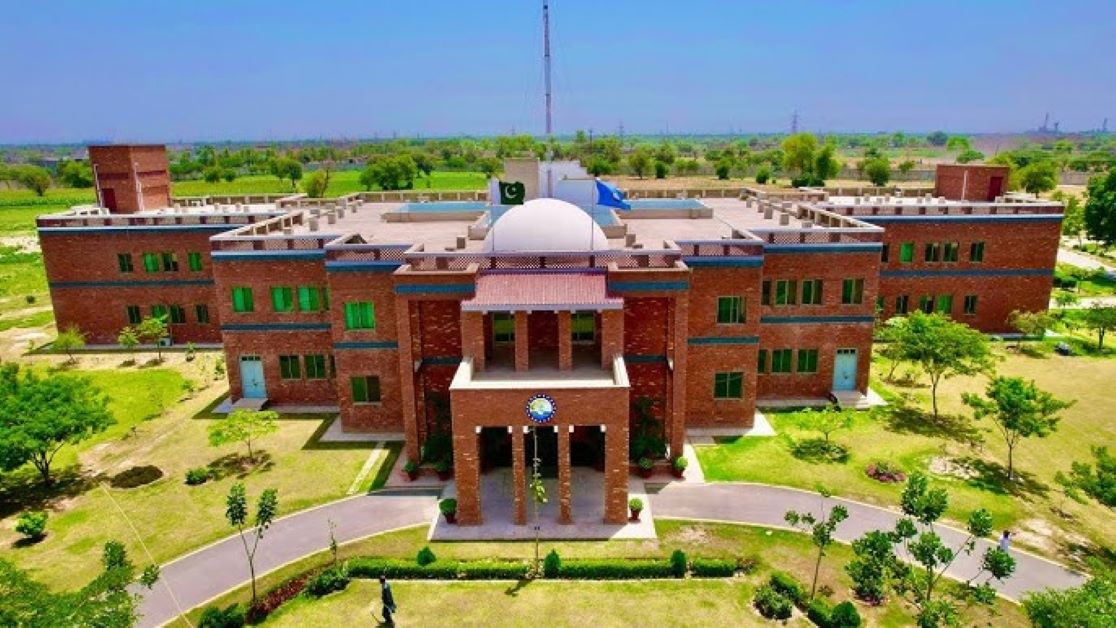
The main campus sits on Old Shujabad Road at the Agriculture Complex. It is a research-focused campus with experimental farms, greenhouse labs, and modern computing facilities. The location is accessible from all major areas of Multan.
Co-Education
Yes. MNSUAM is a public sector university. Boys and girls study together in all programs.
Hostel Accommodation
On-campus hostel is available for both male and female outstation students. Fees are set by the university each semester. Apply early because hostel seats at public universities fill quickly.
Transport
The university operates a fleet of buses connecting the Old Shujabad Road campus with major residential sectors across Multan. If you live in the city, you likely have a pickup point near your area.
Labs and Research Facilities
- Experimental farms and agricultural research plots for crop science students
- Tissue culture and biotechnology labs for life sciences students
- Computer labs with development environments for CS, IT, and data science students
- Food science and nutrition labs for dietetics students
- Library with physical and digital resources including HEC Digital Library access
Campus Vibe
Research-oriented. You will see agriculture students in field boots collecting soil samples. CS students in the lab working on agri-tech projects. Food science students in the nutrition lab. The university emphasizes practical research because it is attached to the agriculture sector. If you want a purely social campus experience, this is not the place. If you want to build skills that solve real problems in South Punjab’s farming economy, this fits.
Career Opportunities After MNSUAM
Where agriculture graduates work:
- Punjab Agriculture Department
- Private seed and fertilizer companies
- NGOs working on food security and climate adaptation
- Agricultural research institutes
- Banks with agricultural financing wings
Where computing graduates work:
- Software houses in Multan and Lahore
- Agri-tech startups building precision farming tools
- Government IT departments
- Teaching at colleges and universities after MS or PhD
Where food and nutrition graduates work:
- Hospitals and clinical settings
- Food processing companies
- Quality control labs
- Public health departments
Starting salaries: Fresh BSCS graduates typically start at PKR 35,000 to 55,000. Agriculture graduates in government or private sector roles start at PKR 30,000 to 50,000. Food science and nutrition graduates start at PKR 25,000 to 45,000. MS and PhD graduates command higher salaries in research and teaching roles.
The honest truth: MNSUAM is not a brand name like UAF or UET. But for South Punjab, it is growing fast. The agriculture degree carries weight in local government and agri-business circles. The computing degree is newer but the Institute of Computing is actively building industry links. Your research projects and internships matter more than the university name at this stage.
MNSUAM vs UAF vs BZU: Which One is Better?
| Factor | MNSUAM | University of Agriculture Faisalabad (UAF) | Bahauddin Zakariya University (BZU) |
| Type | Public | Public | Public |
| Fee per semester (BSCS) | ~PKR 42,000–53,000 | ~PKR 40,000–60,000 | ~PKR 25,000–40,000 |
| Agriculture focus | Very strong | Very strong | Moderate |
| Computing programs | Growing (BS CS, IT, AI, DS) | Established | Established |
| Campus location | Old Shujabad Road, Multan | Faisalabad | Multan |
| Hostel | On-campus | On-campus | On-campus |
| Brand in agriculture | Growing in South Punjab | Strong nationwide | Moderate |
If you live in Multan and want to study agriculture without moving to Faisalabad, MNSUAM is the logical choice. If you got into UAF on merit, UAF still has the stronger national brand. BZU is cheaper but less focused on agriculture and food sciences.
Frequently Asked Questions
MNSUAM is a public sector university established by the Government of Punjab in 2013.
Yes. All degree programs are approved by the Higher Education Commission.
For undergraduate programs, the last date is 31 July 2026. For postgraduate admissions, the last date is 21 August 2026.
No. Entry test is mandatory only for B.Sc. Agricultural Engineering and B.E. Tech (Agro Industrial). All other undergraduate programs including BSCS admit based on academic marks.
Yes. You need 50% in FSc and you must pass deficiency mathematics courses in your first year.
First semester is PKR 52,800. Subsequent semesters are approximately PKR 42,350.
Yes. On-campus hostel is available for male and female students.
Yes. Agriculture graduates work in government departments, seed companies, and NGOs. CS graduates work in software houses and agri-tech startups. Starting salaries range from PKR 25,000 to 55,000 depending on your field.
Call 061-920-1541 or 061-9201681. Email [email protected]. Visit mnsuam.edu.pk.
Final Thoughts
MNSUAM Multan is one of the best-value public universities in South Punjab. The MNSUAM fee structure is genuinely low. The agriculture programs are deeply rooted in research. The computing programs are growing. And the admission process is simple — no entry test for most degrees.
It is not perfect. The brand is still building outside Multan. The campus is research-focused, not