
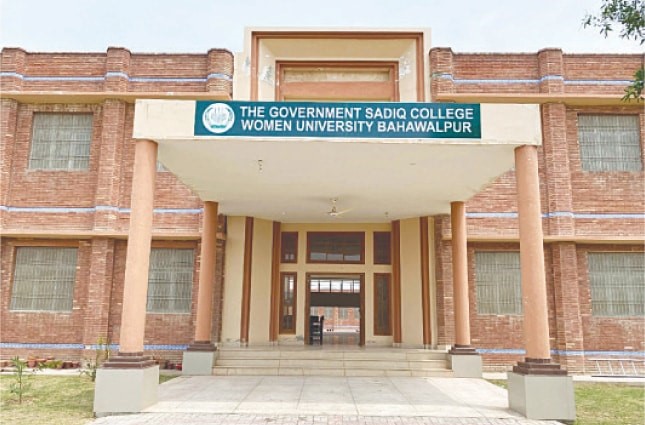
The recent syndicate meeting at Government Saddiq College Women University, Bahawalpur, has triggered serious concerns regarding the legal credibility of Pakistan’s higher education system. Reports confirm that Zahida Azhar, Additional Secretary of the Punjab Higher Education Department (HED), chaired the meeting despite not being a legally authorized syndicate member.
According to university regulations and the University Act, only specific members are empowered to preside over such meetings. This incident has drawn attention to possible violations of established legal frameworks governing higher education institutions in Punjab.
University Act and Authority of Syndicate Members
Under the University Act, the principal members of a university syndicate include the Provincial Minister of Education acting as Pro-Chancellor and the Secretary of the Higher Education Department. The law explicitly states that the Pro-Chancellor should chair the syndicate, ensuring that leadership remains in the hands of legally designated authorities.
In situations where the minister cannot attend, the responsibility may be lawfully delegated to another syndicate member. This legal structure maintains accountability and ensures that decisions are made by officials entrusted with formal authority.
Deviation from Legal Procedures
The recent event at Saddiq College Women University deviated significantly from this legal framework. The Provincial Minister had lawfully delegated his presidential powers to the Secretary of the Higher Education Department, in line with statutory requirements.
However, in the absence of the Secretary, these powers were further passed on to the Additional Secretary, Zahida Azhar, who is not legally empowered to assume such responsibilities. Legal experts have identified this as a clear case of unlawful sub-delegation. Which raises critical questions about the legitimacy of the decisions taken during the meeting.
Importance of the Delegatus Non Potest Delegare Principle
Administrative and constitutional law follows the well-known principle of Delegatus non potest delegare, meaning a delegated authority cannot further delegate powers unless explicitly authorized by law. This principle is essential for maintaining accountability and legal integrity in governance.
In the context of higher education, adherence to this principle ensures that the syndicate functions under legitimate leadership. Violations of this doctrine not only compromise legal processes but also affect the credibility of decisions made by educational institutions.
Legal Experts Highlight Unlawful Sub-Delegation
Legal authorities emphasize that while the Secretary of Higher Education can assign administrative or representational tasks to the Additional Secretary. The delegation of Pro-Chancellor powers is strictly prohibited. By assuming these powers, Zahida Azhar may have exceeded her legal authority, rendering the syndicate meeting’s chairmanship invalid.
Such actions could undermine the legality of resolutions, approvals, and policy decisions passed during the meeting. The scenario illustrates how minor deviations from law can have significant implications for institutional governance and higher education standards.
Implications for University Decisions and Policies
The syndicate meeting’s legality is crucial because it determines the validity of all decisions taken, including academic approvals, financial sanctions, and administrative policies. If the chairperson’s authority itself is in question, then every decision from the meeting may face legal challenges in courts.
Legal analysts suggest that such breaches of law, if left unaddressed, could set dangerous precedents for other universities across the country. Ensuring proper legal procedures are followed is vital for maintaining institutional credibility and public trust in the higher education system.
Historical Concerns and Repeated Violations
Sources from within the university indicate that Zahida Azhar has previously chaired several syndicate meetings, raising questions about repeated legal violations and systemic lapses. Historical patterns of unlawful chairmanship can compromise transparency and accountability in decision-making.
This ongoing practice highlights the need for stricter oversight from the Higher Education Department and the provincial government. Observers argue that unchecked deviations from legal norms can weaken governance frameworks and diminish public confidence in higher education institutions.
Lack of Transparency from Officials
The absence of a response from key officials further complicates the situation. Government Saddiq College Women University Vice-Chancellor, Professor Dr. Shazia Anjum, did not respond to calls requesting comments regarding the incident.
The university registrar stated that the powers had been delegated by the Provincial Minister, while neither the Secretary of Higher Education Punjab nor Additional Secretary Zahida Azhar provided any clarification. This lack of transparency fuels suspicion and emphasizes the need for prompt legal and administrative review of the syndicate meeting proceedings.
Calls for Immediate Legal Intervention
Legal experts argue that immediate intervention is necessary to prevent long-term damage to the credibility of the higher education system. The resolutions and policy decisions passed under an unlawfully chaired meeting may face judicial scrutiny, potentially delaying crucial academic and administrative initiatives.
Addressing the issue through an inquiry and annulment of improperly conducted meetings would reinforce accountability and restore faith in governance processes. Such corrective measures are essential to maintain the integrity of universities and the public’s trust in higher education institutions.
Accountability in University Governance
The principle of accountability is central to educational governance, ensuring that decisions are made by properly authorized officials. Allowing unauthorized delegation of powers undermines institutional frameworks and can lead to significant legal challenges.
Experts stress that adherence to statutory guidelines protects universities from controversies and upholds professional standards. Transparent and lawful governance safeguards the interests of students, faculty, and administrative staff while ensuring smooth academic operations within higher education institutions.
Oversight Challenges in Punjab’s Higher Education Sector
The incident at Saddiq College Women University highlights
- Broader concerns about oversight in Punjab’s higher education sector.
- Repeated sub-delegation of powers could weaken legal structures and enable arbitrary decision-making by unauthorized officials.
- Monitoring compliance with the University Act and related regulations is essential to maintain institutional credibility.
- Authorities must take immediate corrective action to ensure syndicate meetings follow legal provisions and governance protocols.
Public Awareness and Role of Parhlo Pakistan
Parhlo Pakistan plays a vital role in raising awareness about educational governance and legal matters affecting academic institutions. The platform consistently provides authentic news, detailed analysis, and updates related to universities, colleges, and higher education policies.
Parhlo Pakistan informs the public and promotes accountability. Students, parents, and academic professionals rely on its accurate reporting to stay informed about developments impacting the education sector across the country.
Recommendations for Legal Review
Experts recommend a thorough inquiry into the conduct of the syndicate meeting and the individuals responsible for legal violations. Legal review of the decisions taken is essential to ensure they comply with statutory requirements and constitutional principles.
Academic circles urge that any resolutions passed under unauthorized chairmanship should be reconsidered to protect the integrity of the institution. Such steps are critical to restoring public confidence in higher education governance and preventing further breaches of law in universities.
Importance of Clarity in Delegation of Powers
The need for clarity in delegation of powers cannot be overstated, as it safeguards institutional credibility and public trust. Universities must strictly follow statutory provisions, ensuring that every decision is legally valid and binding.
Failure to adhere to governance norms may expose institutions to legal challenges, reputational damage, and administrative confusion. Strengthening legal compliance and oversight mechanisms is essential for sustainable growth and quality assurance in Pakistan’s higher education system.
Conclusion
In conclusion, the recent syndicate meeting at Saddiq College Women University demonstrates serious legal violations, raising questions about accountability, governance, and decision making within the higher education system. Immediate corrective measures, including inquiry, annulment of decisions, and reinforcement of statutory authority, are necessary to restore institutional credibility.
Transparency, adherence to law, and accountability must guide university governance to protect students’ interests and maintain public confidence. Upholding these principles ensures that higher education institutions continue to operate with integrity and professional standards in Pakistan.