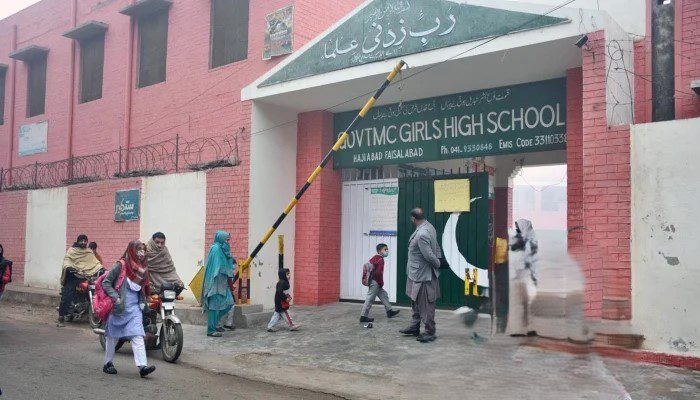

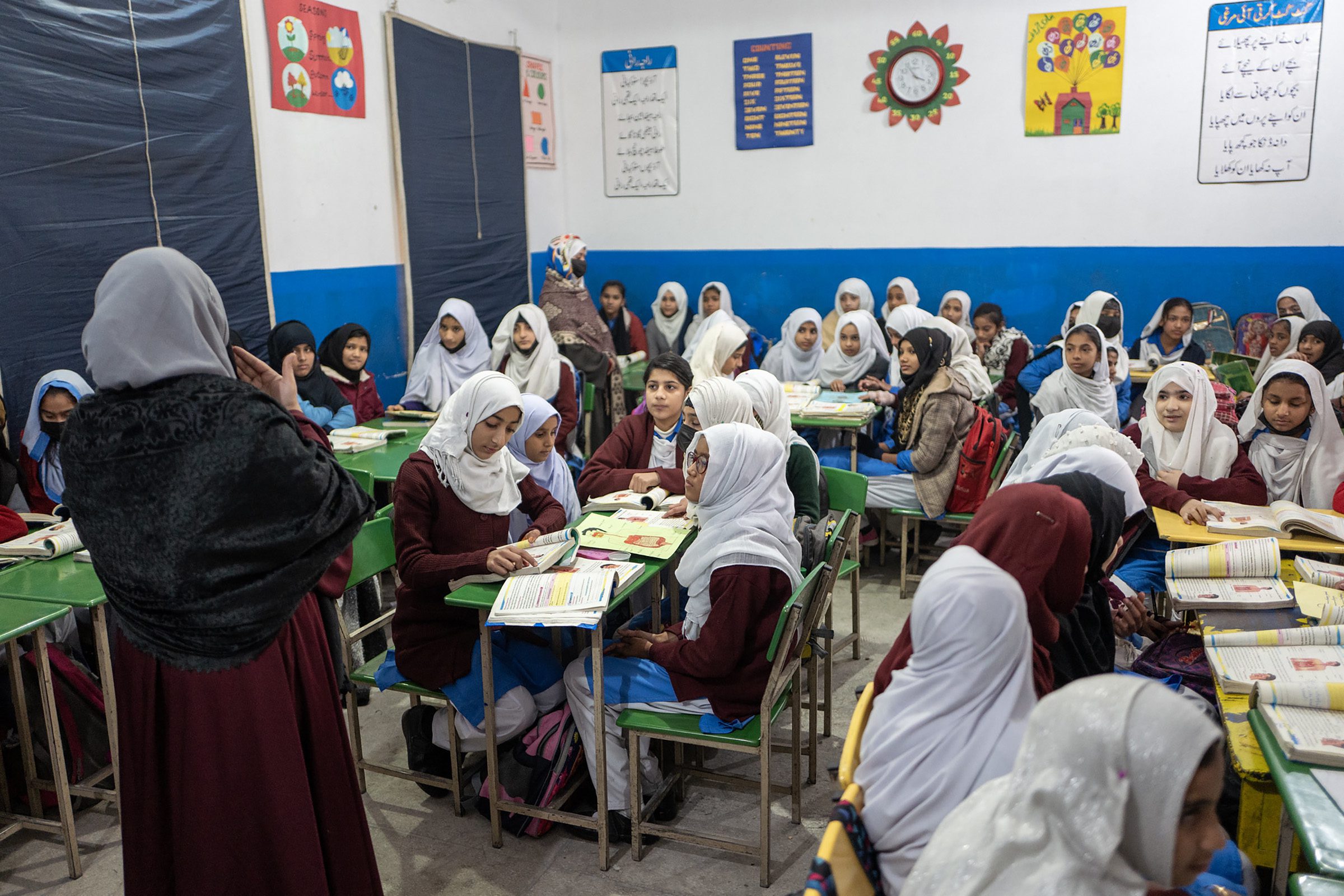
The Government of Punjab has recently announced an unprecedented initiative that aim at transforming the province educational system. With a massive allocation of Rs. 150 billion, the School-Level Skill Program will integrate technical education from the secondary level. This ensures students graduating from grade 9 onwards will earn both traditional academic certificate and internationally recognized vocational qualifications.
This ambitious program is widely regarded as the most transformative educational reforms in Punjab history. By aligning schooling with industry demands this initiative aim to equip students with practical job ready skills from the very start of their high school journey. The project will bridge the persistent gap between theoretical learning and the real-world competencies needed in modern professions.
Spearheaded by the School Education Department the program marks a paradigm shift from conventional rote memorization towards experiential hands on learning. Students will have opportunities to develop technical expertise in parallel with their academic studies. The government envisions a future workforce that is literate but technically skilled and capable of competing globally.
Closing the Gap Between Schools and Real World Jobs
For decades Punjab education system has been criticized for producing graduates who struggle to meet modern job market expectations. The new skill program directly addresses this challenge by embedding vocational training into secondary school curriculum. By combining classroom learning with practical experience students will emerge with competencies that enhance employability immediately after graduation.
This initiative is not just about education it is a pathway for economic empowerment said by a senior official from the School Education Department. The program moves beyond textbooks and theory to focus on skills that industries actively seek. Students will graduate with expertise in fields such as information technology, agriculture, trades and renewable energy technologies.
The curriculum has been designed to be diverse covering high demand sectors such as solar energy, livestock management, e-commerce and digital literacy. By giving students the flexibility to choose areas of interest the program ensures both personal engagement and alignment with evolving market needs. This multi disciplinary approach is expected to strengthen both provincial and national economies.
Step-by-Step Implementation and Modern Training
- The Rs. 150 billion program will upgrade school infrastructure to support modern skill-based and technical learning environments.
- Implementation will follow a phased strategy to ensure quality delivery and smooth operations across all participating schools.
- Specialized school clubs and cluster centers will be established to provide structured, practical, and hands-on training opportunities.
- Cluster centers will function as shared hubs, offering technical resources and expertise to multiple schools within each region.
- This approach ensures students in remote and under-resourced areas can access high-quality technical training facilities equally.
- Students will gain practical experience using modern tools, simulators, and digital platforms aligned with real-world industry practices.
- Virtual labs, industry-standard equipment, and integrated digital literacy will prepare students for competitive local and global job markets.
Globally Recognized Skills and Certification
A critical feature of the Punjab School-Level Skill Program is its alignment with the National Vocational Qualifications Framework (NVQF). Adhering to these standards ensures students receive certificates that carry credibility both nationally and internationally. NVQF certification guarantees that the competencies acquired by students meet globally recognized benchmarks.
This recognition increases students’ mobility in the job market, allowing them to explore opportunities abroad or with multinational companies in Pakistan. Graduates will enter the workforce with skills validated by a trusted certification framework. The program ensures that every student completes school with credentials that are meaningful, respected, and portable.
Certification is the key to unlocking professional opportunities for young people, explained an education planning expert involved in the initiative. By following NVQF standards, the program provides a verified skill set that assures employers of a student’s competence. Students will thus possess not only knowledge but also a recognized practical proficiency that meets international norms.
Opening Doors to Jobs and Business Opportunities
Beyond classroom instruction, the initiative emphasizes direct linkages to employment and entrepreneurship opportunities. Memorandums of understanding (MoUs) will be signed with industry partners, chambers of commerce, and trade associations to facilitate internships, apprenticeships, and job placements. Students will benefit from hands-on exposure to workplace environments even before graduation.
Officials anticipate that these partnerships will solve two critical issues simultaneously: supplying industries with skilled, ready-to-work talent while guaranteeing students a clear route to employment. By integrating education with professional pathways, the program ensures that students can transition smoothly from school to the workforce. This approach also fosters self-reliance, giving graduates the tools to start their own businesses if desired.
The economic impact of skilling millions of students is expected to be significant. Youth employment will increase as graduates become more employable, reducing unemployment rates among educated young adults. Local industries will benefit from a skilled labor pool, decreasing dependency on outside talent and improving productivity across the province.
Additionally, the program encourages entrepreneurship by providing students with skills to launch small businesses. By fostering an environment where innovation and practical expertise are nurtured, the initiative promotes economic growth at both micro and macro levels. The ripple effects of the program are anticipated to strengthen communities and drive sustainable development in Punjab.
Punjab’s Bold Plan for a Skilled Tomorrow
The Punjab government is committed to monitoring and evaluating the program’s implementation to ensure transparency and effectiveness. With a clear roadmap for phased deployment, officials aim to maximize the impact of the Rs. 150 billion investment. Moreover, The initiative reflects a long-term vision to make education more meaningful, equitable, and aligned with labor market needs.
If successful, this program could become a national blueprint for educational reform. Punjab’s approach demonstrates how targeted investment in skill development can create a workforce that is skilled, employable, and globally competitive. It also highlights the role of education as a driver for economic empowerment and social progress.
About Parhlo Pakistan
Parhlo Pakistan is committed to delivering reliable and engaging content on education, current affairs, and development initiatives. Our platform provides students, parents, and educators with accurate information about reforms, policies, and opportunities in Pakistan.
Parhlo Pakistan believes that knowledge sharing is the foundation for progress, helping communities stay informed about key initiatives. We focus on presenting content in clear, simple language while maintaining factual accuracy. The platform also encourages readers to participate actively in educational and professional developments across the country.
Conclusion
The Rs. 150 billion Punjab School-Level Skill Program signifies a bold step towards revolutionizing education in the province. By integrating technical and vocational training into secondary education, the initiative ensures students graduate with market-ready skills. It strengthens the connection between academia and industry, empowering youth to contribute effectively to the economy.
Through modern technology, hands-on learning, and internationally recognized certification, the program prepares students to thrive in the 21st-century workforce. By fostering employment pathways and entrepreneurship opportunities, it addresses key socio-economic challenges while promoting sustainable growth. The Punjab initiative reflects a forward-thinking vision where education is both a personal asset and a societal investment.
With careful implementation and continuous monitoring, this mega skill program has the potential to transform lives, elevate industries, and set a precedent for similar educational reforms nationwide. However Punjab’s youth are now positioned to become a highly skilled, self-reliant, and globally competitive generation.