

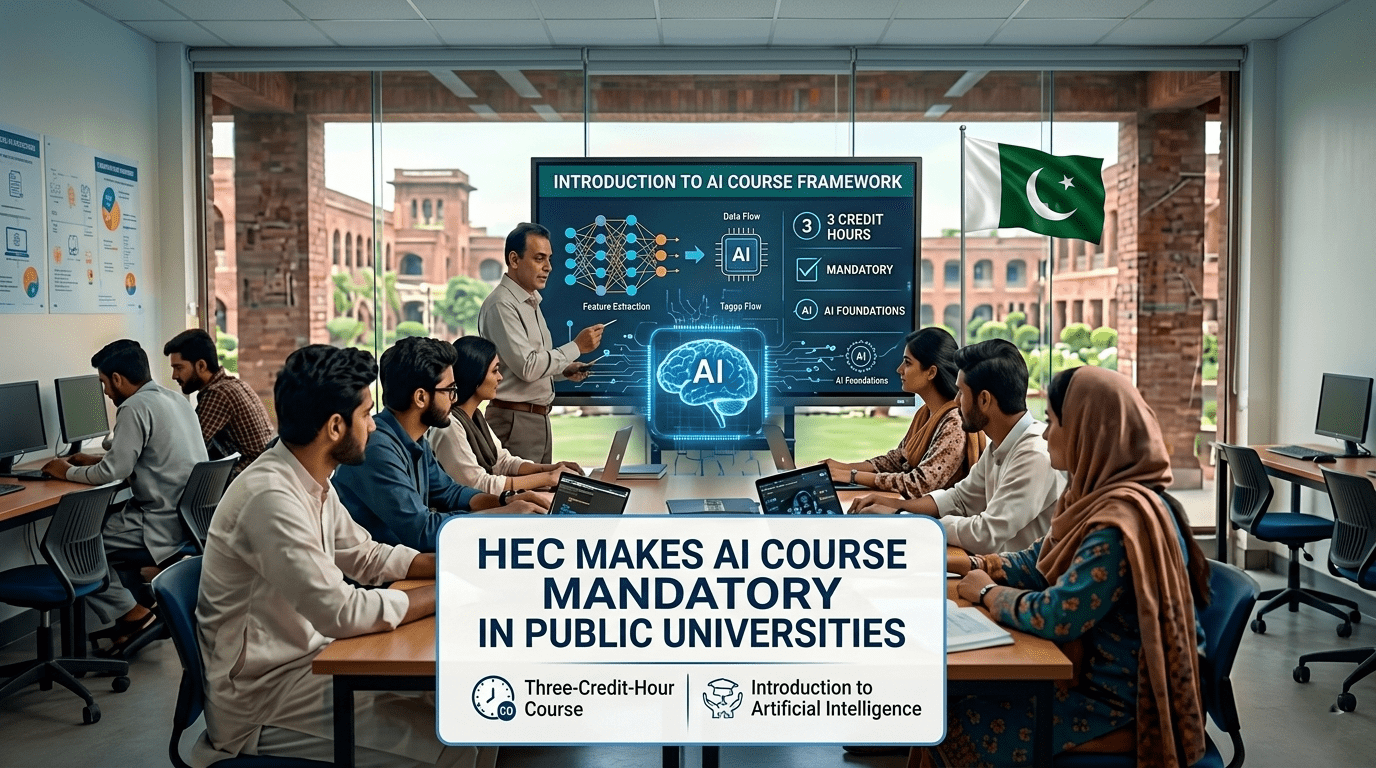
Pakistan’s higher education sector is entering a transformative phase through important academic reforms. The Higher Education Commission has announced measures supporting modern technological learning nationwide. These developments aim to prepare students for future careers requiring advanced digital competencies.
Public sector universities have received directions introducing a mandatory AI course across programs. This initiative reflects growing recognition of technology’s influence across industries and professions. Students will gain valuable knowledge supporting career growth within increasingly competitive environments.
The decision emerged following recommendations presented by education experts and university administrators. Academic leaders discussed implementation strategies during consultative meetings involving public university representatives. Their collective support highlighted artificial intelligence’s importance within contemporary higher education systems.
Why Artificial Intelligence Education Matters
Artificial intelligence continue reshaping workplaces, businesses, healthcare systems and communication worldwide today. Organizations increasingly seek professionals understanding emerging technologies and modern digital solutions effectively. Universities must therefore provide the relevant education matching changing market demands and expectations.
Many industries already use intelligent systems for automation, decision making and analysis. Graduates lacking technological awareness may face challenges while competing with in rapidly evolving markets. Educational institutions must adapt curricula accordingly to graduates remain professionally competitive.
The introduction of structured AI learning create opportunities for students across disciplines. Technology knowledge benefits learners studying business, science, engineering, healthcare and education. Broader exposure encourages innovation while supporting practical problem solving within diverse professional fields.
Introduction to Artificial Intelligence Course
Universities will introduce a course titled Introduction to Artificial Intelligence within undergraduate programs. The approved subject carries 3 credit hours and focuses on foundational concepts. Students will learn essential principles supporting deeper understanding of modern technological developments.
The course aims to simplify complex concepts through accessible educational frameworks and methods. Learners will explore practical applications affecting industries, organizations, and everyday activities globally. This approach encourages greater confidence when engaging with advanced technological tools professionally.
Officials believe the mandatory AI course will strengthen academic quality across institutions. Standardized learning outcomes can help ensure consistent educational experiences nationwide for students. Universities will gradually integrate content while maintaining existing academic standards and objectives.
Development of the AI Curriculum
To support implementation, Information Technology University Lahore developed proposed course modules carefully. These modules provide structured guidance for institutions introducing artificial intelligence education programs. Academic experts designed content emphasizing practical understanding alongside essential theoretical foundations.
Education authorities reviewed the proposed outlines during important higher education policy meetings. Detailed discussions ensured course objectives aligned with national educational priorities and goals. Approval cleared the path for wider adoption throughout Pakistan’s public university network.
The curriculum development process reflects collaboration between educational institutions and policymakers nationwide. Such cooperation helps create relevant learning experiences addressing current technological trends effectively. Students ultimately benefit from carefully designed courses supporting future professional advancement opportunities.
Phased Implementation Across Universities
Authorities have recommended phased implementation allowing universities sufficient preparation and coordination time. This strategy supports smoother integration without disrupting existing academic structures and schedules. Institutions can gradually adjust curricula while maintaining educational continuity for enrolled students.
Different departments may introduce the Artificial Intelligence course according to approved timelines. Universities will evaluate academic requirements before incorporating content into relevant programs. Careful planning helps ensure successful implementation across diverse educational disciplines and environments.
The phased approach also allows administrators to monitor progress and address challenges. Feedback from institutions can support improvements enhancing overall educational effectiveness significantly. Continuous evaluation remains important for achieving long term success across participating universities.
Formal Instructions and Standardization
Formal notifications have been issued emphasizing the importance of technology focused education initiatives. Public universities received approved outlines supporting consistent implementation across academic institutions. Standardization helps maintain quality while ensuring comparable learning opportunities for all students.
Educational authorities want institutions following shared guidelines during course integration processes. Consistent frameworks reduce confusion while promoting stronger academic outcomes across universities. Students benefit from receiving similar foundational knowledge regardless of institutional location.
The mandatory AI course represents an organized effort rather than isolated institutional initiatives. National coordination strengthens educational planning while supporting broader technology development objectives. Such measures contribute toward building a skilled workforce prepared for future demands.
Benefits for Students
The newly introduced AI course will provide students with practical knowledge and valuable career-oriented skills. As technology continues advancing rapidly understanding artificial intelligence will become increasingly important across the various industries.
- Learn the fundamentals of machine learning and artificial intelligence.
- Develop problem solving and analytical thinking abilities.
- Understand automation and modern data driven technologies.
- Improve employability in local and international job markets.
- Gain skills relevant to future technology focused careers.
Students from the different academic backgrounds will be benefit from exposure to emerging technologies and digital concepts. This knowledge could help graduates to adapt the changing workplace requirements and pursue new professional opportunities with greater confidence.
Supporting Pakistan’s Digital Future
Pakistan continue pursuing digital transformation through investments supporting technology and innovation initiatives. Educational reforms play essential roles within broader national development and modernization strategies. Universities serve as important foundations preparing future professionals for changing economic realities.
Integrating artificial intelligence education demonstrate the commitment toward strengthening national technological capabilities significantly. Skill graduates can contribute meaningfully toward innovation, entrepreneurship and economic growth. Educational investments today may generate substantial benefits across multiple sectors tomorrow.
The initiative also support efforts addressing digital skills gaps within the workforce. Expanding technology education helps create stronger connections between academic learning and employment. Better alignment benefits students, employers, institutions and broader national development objectives.
Government support for technology focused education reflects awareness of future workforce requirements. Preparing students today helps ensure readiness for opportunities emerging during coming decades. Strategic educational planning remains essential for sustained competitiveness within global knowledge economies.
The Role of Parhlo Pakistan
For students seeking reliable educational updates, admissions news, scholarships and career guidance Parhlo Pakistan serves as valuable resource. The platform regularly shares important developments from universities, educational authorities and government initiatives. Readers can stay informed about changing academic policies and opportunities through timely coverage.
Conclusion
The introduction of a mandatory AI course marks an important educational milestone nationally. Universities will help students develop relevant skills supporting future academic and professional success. This forward looking initiative strengthens Pakistan’s commitment toward innovation, technology, and digital progress.
For the latest admission alerts, scholarship announcements, and academic updates, keep visiting the News Section of Parhlo Pakistan regularly.